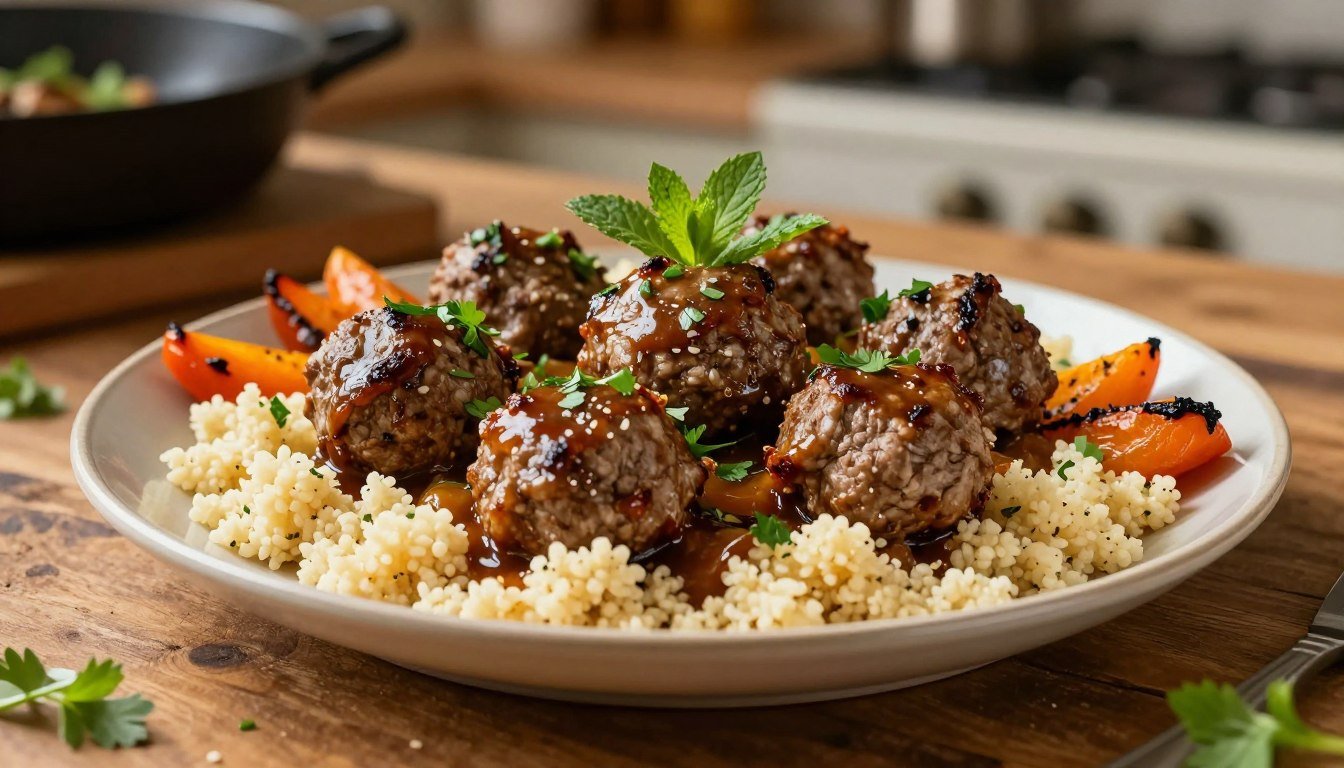
There’s something special about pulling golden, aromatic meatballs from your oven. The smell fills your kitchen with warmth and comfort. It reminds you of family dinners where homemade food brought everyone together. You can create that feeling with your own lamb meatballs recipe at home.
Many home cooks think making meatballs is hard or takes a lot of time. But, you can have restaurant-quality lamb meatballs in under 30 minutes. This guide will show you how to master this classic dish.
Learning to make lamb meatballs changes your dinner game. The right mix of herbs and spices turns simple ground lamb into something unforgettable. You don’t need to be an expert chef to get it right.
This article will guide you through every step. From picking the best lamb to plating your finished dish, you’ll learn professional techniques for your kitchen. Both beginners and experienced cooks will find value in these proven methods.
Key Takeaways
- A quality lamb meatballs recipe takes less than 30 minutes from start to finish
- The right mix of herbs and spices defines authentic Mediterranean flavors
- Ground lamb quality directly impacts your final dish
- Proper mixing and shaping techniques ensure juicy, tender meatballs
- Baking produces better results than pan-frying for most home cooks
- Leftover meatballs store well for quick meals throughout the week
- Common mistakes are easy to avoid once you know what to watch for
Why Lamb is the Perfect Choice for Meatballs
Choosing the right meat is key to making delicious homemade meatballs. Lamb is a top choice for its nutrition and taste. It adds something special to your meatballs.
Lamb is a great protein source with unique benefits. Its natural makeup makes it cook better than other meats.
Nutritional Benefits of Lamb
Lamb is packed with nutrients that boost your health and energy. It has important B vitamins for your body’s daily needs.
- High in zinc, which strengthens your immune system
- Rich in iron for healthy blood circulation
- Contains B vitamins that boost energy and brain function
- Provides complete protein with all amino acids
Lamb’s fat is key in cooking. Unlike lean meats, it melts slowly, keeping meatballs moist and tender.
Understanding the Flavor Profile
Lamb has a distinct, earthy flavor that’s different from chicken or beef. This flavor pairs well with Mediterranean spices like garlic, oregano, and mint. Knowing this helps you season your meatballs right.
The meat’s strong taste lets you use bold spices without overwhelming it. This makes your meatballs taste like authentic Mediterranean dishes.
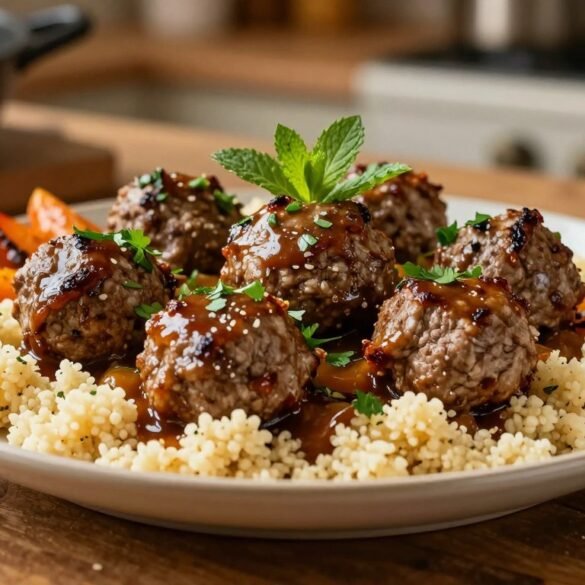
Ingredients
- 500g ground lamb (15–20% fat)
- 1/2 cup breadcrumbs
- 3–4 garlic cloves, minced
- 1 egg
- 1/4 cup fresh parsley, finely chopped
- 1 teaspoon ground cumin
- 1 teaspoon ground coriander
- 1/4 teaspoon ground cinnamon
- Salt and black pepper to taste
- 2 tablespoons olive oil
Instructions
Step 1: Remove the ground lamb from the fridge just before mixing. Combine all herbs, spices, garlic, egg, and breadcrumbs in a large bowl first.
Step 2: Add the ground lamb to the bowl and mix gently with your hands for no more than 1–2 minutes. Do not overwork the meat.
Step 3: Refrigerate the mixture for 15 minutes to firm it up and help the meatballs hold their shape.
Step 4: Preheat your oven to 200°C (400°F). Lightly oil your palms and roll the mixture into balls of about 1 to 1.5 inches in diameter.
Step 5: Place the meatballs on a lined baking tray, spaced evenly apart.
Step 6: Bake for 18 to 20 minutes until golden brown and cooked through.
Step 7: Serve hot with your choice of sauce, flatbread, rice, or a fresh salad.
Notes
Always use cold ground lamb for the best texture — warm meat becomes tough when mixed. Do not skip the chilling step — it prevents the meatballs from falling apart during cooking. For extra juiciness, choose lamb with 20% fat content rather than lean lamb. Leftovers keep in the fridge for up to 4 days and freeze well for up to 3 months. Fresh herbs always give better flavor than dried — especially parsley and mint.
Essential Ingredients for Authentic Mediterranean Lamb Meatballs
To make mediterranean lamb meatballs at home, start by gathering the right ingredients. These ingredients combine to create the rich, authentic flavors that make this dish special. Quality ingredients are key to a great final result.
The base of your meatballs needs ground lamb as the main ingredient. Look for lamb with 15-20% fat content. This keeps the meatballs moist and tender. Fresh herbs add brightness to each bite.
Warm spices are what make these meatballs special. Cumin adds earthy warmth, while coriander brings subtle citrus notes. A pinch of cinnamon adds depth, tying everything together.
Breadcrumbs are important. They absorb moisture and help the meatballs stay together without being dense. Choose high-quality breadcrumbs or make your own from day-old bread.
Fresh herbs are more important than dried ones. Parsley adds freshness, and fresh mint adds extra brightness. Always use fresh garlic for better flavor.
Buy your ingredients from trusted sources. Visit local markets or specialty stores for quality lamb and fresh produce. The better your ingredients, the better your mediterranean lamb meatballs will taste.
Preparing Your Kitchen for the Best Lamb Meatballs Recipe
Before you start cooking ground lamb meatballs, prepare your kitchen. This makes cooking easier and more fun. You need to organize your space, pick the best ingredients, and have all your tools ready.
Good preparation leads to better results. Your meatballs will taste better and cook evenly if you start right.
Selecting Quality Ground Lamb
The meat you choose is key to a great dish. Look for ground lamb with the right fat content. Aim for 20% fat and 80% lean meat.
This mix keeps your meatballs juicy and prevents them from drying out. For the best taste and texture, buy fresh lamb from a butcher or quality store. Ask them to grind it fresh if you can.
Gathering Fresh Herbs and Spices
Before mixing, gather all your herbs and spices. Use fresh herbs like cilantro, mint, and parsley for bright flavors. Wash and chop them well to spread the flavor evenly.
Here’s what you’ll need:
- Fresh cilantro and mint, washed and chopped
- Ground cumin and coriander
- Garlic cloves, minced
- Onion, finely diced
- Salt and black pepper
- Breadcrumbs and egg
- Mixing bowls and spoons
Having everything ready makes mixing faster. You won’t have to stop to find ingredients. A clean, organized kitchen helps you focus on making delicious meatballs.
Mixing Techniques for Tender Ground Lamb Meatballs
The way you mix ground lamb meatballs is key to their tenderness. Many home cooks overwork the meat, leading to a dense, rubbery texture. This is not what you want.
To avoid this, gently combine the ingredients with your hands. Start with cold meat from the fridge. Mix in herbs, spices, and binders lightly. Stop when everything is just blended.
Keeping the meat cold is essential. Cold fat creates pockets that release moisture as they cook. This keeps the meatballs tender and moist.
Key Mixing Steps
- Remove ground lamb from the refrigerator just before mixing
- Combine wet ingredients first, then add the meat gently
- Use your fingertips when you can
- Mix for no more than one to two minutes
- Chill the mixture for 15 minutes before shaping
| Mixing Method | Texture Result | Moisture Level | Recommended |
|---|---|---|---|
| Hand mixing (light) | Tender, soft | High | Yes |
| Hand mixing (heavy) | Tough, dense | Low | No |
| Electric mixer | Very tough | Low | No |
| Food processor | Paste-like | Very Low | No |
This gentle mixing keeps your meatballs moist and flavorful. They will be tender and fall apart easily.
Shaping and Portioning Your Homemade Lamb Meatballs
Getting your homemade lamb meatballs the right size is key for even cooking and taste. This step turns your mixed meat into individual portions that cook evenly. The right technique ensures meatballs that stay together, not fall apart.
Achieving Uniform Sizes
Consistent sizes mean all meatballs cook at the same rate. Use a standard kitchen scoop or tablespoon to portion the meat. This way, none are overcooked while others are raw inside.
Follow these steps for perfect portions:
- Use a 1-tablespoon or 2-tablespoon scoop for consistent sizing
- Roll each portion gently between your palms
- Aim for 1 to 1.5 inch diameter balls
- Keep your workspace clean as you work
Preventing Meatballs from Falling Apart
If your mixture feels too sticky, lightly oil your palms with olive oil before rolling. This makes smooth, round shapes without sticking to your hands.
Chilling is your secret weapon. Place your shaped meatballs in the refrigerator for 15 to 20 minutes before cooking. This helps them hold their shape and prevents them from falling apart in the pan or oven.
Here’s what makes chilled meatballs better:
| Temperature | Benefits | Results |
|---|---|---|
| Room Temperature Meatballs | Easy to shape quickly | May fall apart during cooking |
| Refrigerated Meatballs | Firm texture holds together | Cook evenly, stay intact |
Proper shaping and chilling give your homemade lamb meatballs the structural integrity they need for perfect cooking results.
Cooking Methods for Perfectly Spiced Lamb Meatballs
The way you cook your spiced lamb meatballs is key to their flavor. Each method has its own benefits. It’s all about the texture, time, and how you want to present your dish.
Choosing the right cooking method is important. It helps your meatballs get a golden, flavorful crust while staying juicy inside. Each method highlights different aspects of the lamb and spices.
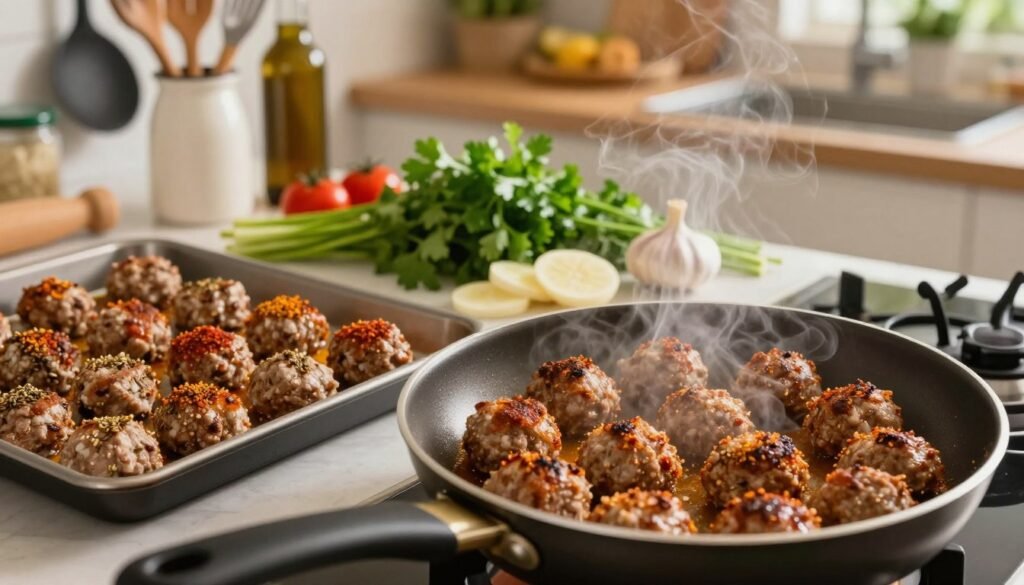
Pan-Searing for a Caramelized Crust
Pan-searing is great for a delicious brown crust on your meatballs. Heat your skillet to medium-high before adding oil. When the oil shimmers, add your meatballs. Cook for two to three minutes on each side.
This method gives a caramelized crust. It locks in juices and brings out the lamb’s natural flavors.
Simmering in Tomato Sauce
Finishing your meatballs in tomato sauce adds moisture and flavor. It’s perfect for a complete dish. The tomatoes’ acidity complements the lamb well.
Start by pan-searing your meatballs for color. Then, transfer them to your sauce to cook through gently.
| Cooking Method | Temperature | Cooking Time | Best For |
|---|---|---|---|
| Pan-Searing | Medium-High Heat | 6-8 minutes | Crispy exterior, juicy center |
| Tomato Sauce Simmer | Medium Heat | 15-20 minutes | Complete dish, added moisture |
| Baking | 375°F | 15-18 minutes | Batch cooking, less oil needed |
Controlling the temperature is important. It prevents burning and ensures complete cooking. Always preheat your cooking surface for the best browning.
- Monitor heat carefully throughout cooking
- Avoid moving meatballs too frequently
- Use a meat thermometer to check doneness
- Rest cooked meatballs for a few minutes before serving
These cooking methods are perfect for your spiced lamb meatballs. They help you make a dish that tastes like it came from a restaurant.
Achieving the Ideal Texture with Baked Lamb Meatballs
Baking is a simple way to cook lamb meatballs at home. It makes them tender and evenly cooked, without the need to stand over a hot stove. The heat surrounds each piece, creating a golden brown outside and a juicy inside.
Baking is a hands-off process. You can prepare other dishes while your meatballs cook. This makes dinner prep easier and less stressful.
Setting the Correct Oven Temperature
Temperature is key to great results. Set your oven to 400°F (200°C) for the best outcome. This heat level browns the outside of your spiced lamb meatballs quickly.
At this temperature, you’ll get:
- A crispy, browned exterior in about 12-15 minutes
- A tender, moist center that stays juicy
- Even cooking throughout the entire batch
- No dry or overcooked spots
Check your meatballs at the 12-minute mark. They should reach an internal temperature of 160°F for food safety.
Using Parchment Paper for Easy Cleanup
Parchment paper is a game-changer for baking. Line your sheet before placing your meatballs on it. This simple step prevents sticking and keeps cleanup fast.
Benefits of using parchment paper include:
- No scrubbing required after cooking
- Meatballs release easily from the pan
- Even heat distribution across the baking sheet
- Less oil needed for cooking
Your baked lamb meatballs will slide right off the paper when done. This method works perfectly whether you’re making a family dinner or preparing meals ahead.
Flavor Profiles of Traditional Greek Lamb Meatballs
Greek lamb meatballs, or keftedes, offer a unique taste experience. The magic comes from blending spices and fresh ingredients. This creates a bright, aromatic flavor. These recipes have been passed down through generations in Greece and the Mediterranean.
The foundation of authentic greek lamb meatballs starts with specific seasonings. These define their character. Understanding these flavors helps you make meatballs that taste genuinely Mediterranean.
Key Flavor Components
The essential flavors in mediterranean lamb meatballs come from a mix of dried oregano, fresh mint, and lemon zest. Dried oregano adds an earthy warmth that complements lamb’s richness. Fresh mint brings a cool, refreshing note that balances the meat’s heaviness. Lemon zest adds brightness and cuts through the fat with natural acidity.
- Dried oregano—creates an earthy foundation
- Fresh mint—adds cooling, fresh flavors
- Lemon zest—brings brightness and acidity
- Feta cheese—contributes a tangy, salty element
- Bread soaked in milk—adds moisture and subtle richness
Regional Variations and Customization
Different regions in Greece prepare their meatballs with slight variations. Some recipes include crumbled feta cheese for extra tang. Others soak bread in milk for moisture and to prevent dry meatballs. These additions make the meatballs tender and enhance their flavor.
| Ingredient | Purpose | Flavor Impact |
|---|---|---|
| Dried Oregano | Primary seasoning | Earthy and warm |
| Fresh Mint | Flavor balance | Cool and refreshing |
| Lemon Zest | Brightness agent | Citrus and sharp |
| Feta Cheese | Moisture and tang | Salty and tangy |
| Milk-soaked Bread | Binding and moisture | Subtle and neutral |
You can adjust these elements based on your taste preferences. Some cooks add garlic for depth, while others include cumin or cinnamon for warmth. The beauty of traditional recipes is their flexibility. Start with the classic combination, then experiment with small adjustments until you find your perfect flavor balance that stays true to Mediterranean roots.
Serving Suggestions for Lamb Kofta Meatballs
Lamb kofta meatballs are very versatile. They go well with many traditional sides. The warm spices in these meatballs pair well with cool, creamy sauces and fresh sides. This makes your homemade meatballs a restaurant-quality meal at home.
The right sides bring out the best in your dish. These Mediterranean-inspired meatballs are best with ingredients that match their taste and texture.
Pairing with Tzatziki Sauce
Tzatziki sauce is the top choice for lamb kofta meatballs. This cool, creamy sauce is made with Greek yogurt, cucumber, and garlic. It’s a perfect match for the warm, savory spices.
The tangy yogurt base and fresh cucumber add brightness. To serve, drizzle the tzatziki over your warm meatballs or use it as a dipping sauce. The difference in temperature makes the dish even better.
Choosing the Right Side Dishes
Finish your meal with sides that show off your lamb’s quality. Here are some great options:
- Fluffy pita bread – Great for wrapping meatballs and sauce
- Greek salad – Adds crisp texture with fresh tomatoes, cucumbers, olives, and feta
- Lemon-herb roasted potatoes – Tender potatoes with bright, savory flavors
- Tabbouleh – Bulgur salad with parsley and lemon juice
- Roasted vegetables – Zucchini, bell peppers, and eggplant complement the spices
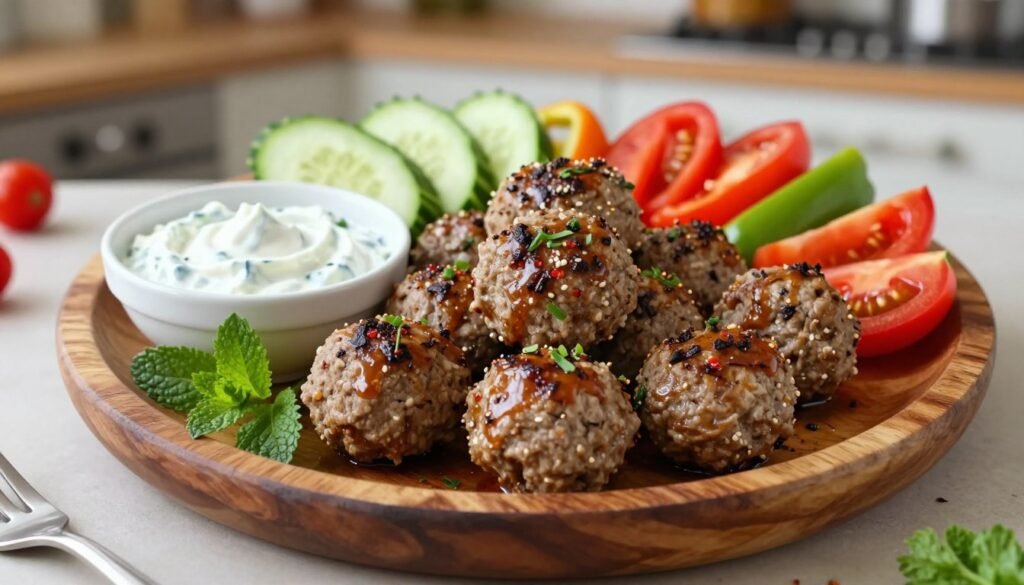
These sides add texture and flavors that make a complete meal. The mix of warm meatballs, cool sauce, and fresh sides balances every bite.
Storing and Reheating Your Leftover Meatballs
Making a big batch of homemade lamb meatballs gives you delicious meals for days. Proper storage keeps your food fresh and safe to eat. Let your cooked meatballs cool to room temperature before you put them away. This step prevents condensation from building up inside your storage container.
Place your cooled meatballs in an airtight container and store them in the refrigerator. Your greek lamb meatballs will stay fresh for up to three days when stored this way. For longer storage, freezing is your best option. Frozen meatballs can last up to two months in your freezer, making them perfect for quick weeknight dinners.
When you’re ready to eat your leftovers, reheating matters just as much as storage. Use low heat in a skillet to bring your meatballs back to life. Add a splash of water or broth to prevent the meat from drying out during the reheating process. This method takes only five to ten minutes.
Here are the best ways to handle your leftover meatballs:
- Cool meatballs completely before storing
- Use airtight containers for refrigerator storage
- Keep refrigerated meatballs for up to three days
- Freeze for up to two months for long-term storage
- Reheat on low heat with added liquid
- Thaw frozen meatballs in the refrigerator overnight
| Storage Method | Duration | Best Use | Reheating Time |
|---|---|---|---|
| Refrigerator | 3 days | Quick meals within the week | 5-10 minutes |
| Freezer | 2 months | Meal prep and backup dinners | 15-20 minutes |
| Room Temperature | 2 hours | Fresh serving immediately | Not needed |
Never leave cooked meatballs sitting at room temperature for more than two hours. Bacteria can grow quickly in the danger zone between 40°F and 140°F. If you’re taking your meatballs to a potluck or party, keep them in a slow cooker on the warm setting to maintain food safety.
Thawing frozen meatballs in the refrigerator overnight is the safest method. You can skip this step and reheat them directly from frozen if needed. Just add a few extra minutes to your cooking time. Your stored meatballs work great in grain bowls, salads, or served with warm pita bread and your favorite dipping sauces.
Common Mistakes to Avoid When Cooking Lamb
Cooking lamb meatballs requires careful attention. Small mistakes can ruin a great dish. Knowing what to avoid helps you make delicious lamb at home. Two big mistakes to watch out for are overcooking and managing fat.
Preventing Overcooking
Overcooking is a big problem with lamb kofta meatballs. Ground lamb dries out fast when cooked too long. It becomes tough and not tasty.
Use a meat thermometer to check the temperature. The USDA says to reach 160°F (71°C) for safety. Check your meatballs at the 12-minute mark to avoid overcooking. Take them out of the heat as soon as they hit the target. Remember, the meat will keep cooking a bit after it’s removed.
- Insert thermometer into the thickest meatball
- Check multiple meatballs for consistency
- Remove from heat at exactly 160°F
- Let meatballs rest for 2-3 minutes
Managing Excess Fat
Ground lamb has natural fat that melts during cooking. Too much fat makes meatballs greasy. Drain some of the fat halfway through cooking for better taste.
If you’re pan-searing, tilt the pan and use a spoon to remove excess grease. For baking, place meatballs on a wire rack over a baking sheet. The fat drips off naturally. If needed, pat the meatballs with paper towels to remove extra fat.
| Cooking Method | Fat Management Technique | Best Time to Drain |
|---|---|---|
| Pan-Searing | Spoon grease from pan | Halfway through cooking |
| Baking | Use wire rack setup | Natural draining throughout |
| Broiling | Position on upper rack | Every 3-4 minutes |
Avoiding these mistakes makes cooking lamb meatballs better. By controlling temperature and managing fat, you get tender and tasty results every time.
Conclusion
Making lamb meatballs at home is easy for any cook. You know how to make juicy and tasty meatballs now. Start with good ground lamb and fresh herbs.
Mix your ingredients carefully to keep the meat tender. These simple steps will always lead to great meatballs.
You learned different ways to cook meatballs. Baking is easy and browns them well. Pan-frying adds a crispy crust.
Both methods work well if you control the heat. Don’t overcook or use too much fat. Your careful attention makes a big difference.
Serving your lamb meatballs is a joy. Try them with tzatziki sauce for a classic taste. Add fresh veggies and grains for a complete meal.
Share these Mediterranean meatballs with loved ones. The skills you learned let you create your own special version. Enjoy the cooking and the yummy results.