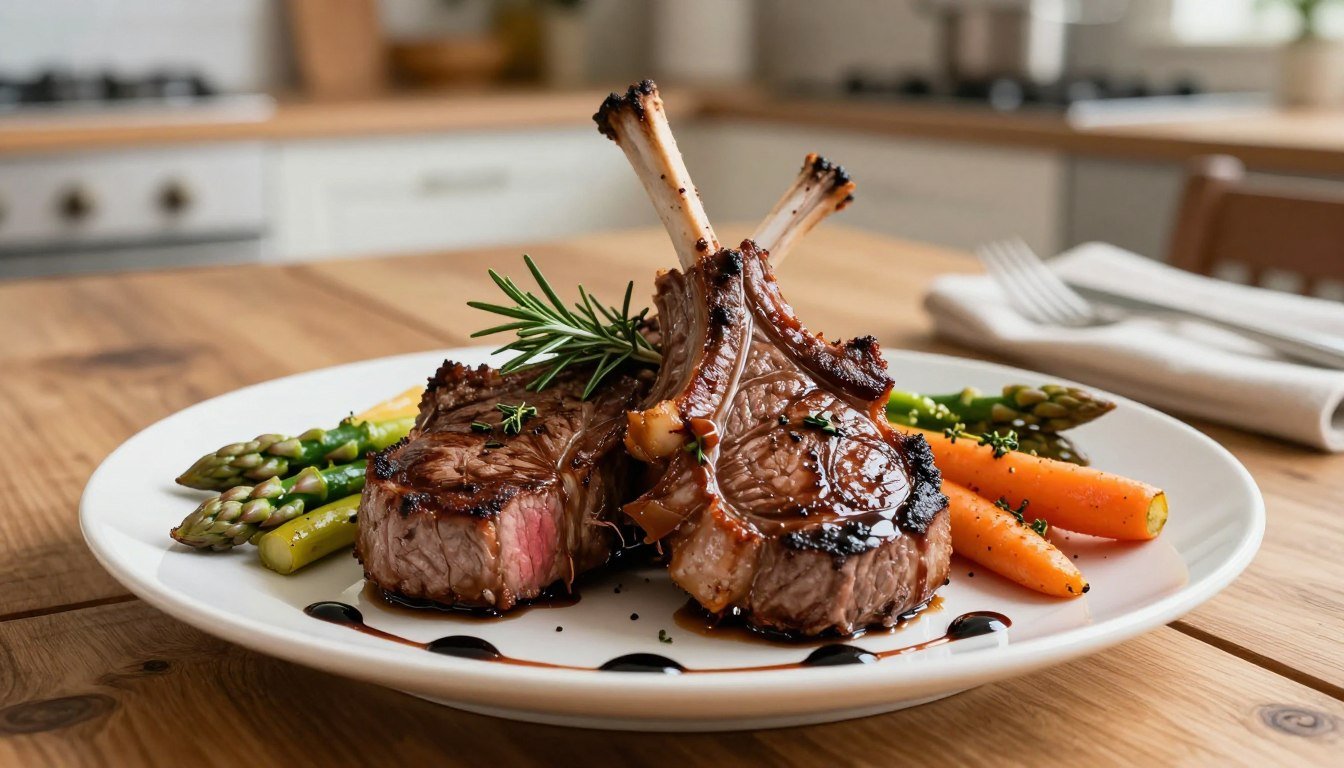
Remember that feeling of cutting into a perfectly cooked Lamb Loin Steaks Recipes at a fancy restaurant? The anticipation, the rich aroma, the first juicy bite. Now imagine creating that exact same experience in your own kitchen tonight.
Many home cooks shy away from preparing certain meats, thinking it’s too complex or easy to mess up. That’s a common myth we’re about to bust wide open.
These particular cuts are often called “mini T-bone steaks” for good reason. They offer that same incredible flavor and tender texture in a perfectly portioned size.
You don’t need to be a professional chef to master this. With a clear, simple guide, you can turn these chops into a centerpiece meal that will have everyone asking for seconds. The process is familiar, straightforward, and delivers restaurant-quality results every single time.
Key Takeaways
- You can achieve gourmet, juicy results at home with the right approach.
- Preparing this protein is much easier than many people believe.
- These specific cuts are prized for their rich flavor and tender texture, similar to a T-bone.
- A clear, step-by-step method is the foundation for a perfect dinner.
- This guide is designed for cooks of all skill levels, from novice to experienced.
- The goal is to create a memorable, flavorful meal for your family or guests.
- You’ll gain the confidence to make this a regular favorite in your cooking rotation.
Getting to Know Your Lamb Loin Steaks
You might be surprised to learn that the most prized part of the animal is also one of the easiest to prepare. These particular chops come from the waist area. This makes them the leanest and most tender option you can find.
Understanding the Cut
The lamb loin is essentially the filet mignon of the animal. It delivers a tender experience that is hard to beat. Each piece looks like a small T-bone steak because of where it’s sourced.
This specific cut is known for a mild, delicious flavor. It’s a fantastic choice for those new to cooking this type of meat.
Why This Cut Works for Quick Dinners
You will find these loin chops are much more affordable than fancy rib options. Selecting the right cut is essential for a great meal.
They are perfect for hectic schedules. These chops need almost no prep before going into a searing hot pan. That means a restaurant-worthy dinner is just minutes away.
Essential lamb loin steaks recipes: Cooking Tips You Need
Culinary expert Natalya Drozhzhin highlights how this cut can effortlessly elevate your standard dinner routine. Mastering a few core techniques is the key to unlocking its full potential.
Always pull your protein from the refrigerator 15 to 20 minutes before you start. This simple step helps it cook evenly. Next, ensure your pan is properly preheated to prevent sticking and create a perfect crust.
You do not need long marinades. High-quality ingredients and controlled heat are the real secrets. This approach makes the dish a reliable, quick solution for a protein-rich family meal.
| Step | Purpose | Key Detail |
|---|---|---|
| Temperature Resting | Promotes even cooking | 15-20 minutes at room temperature |
| Pan Preheating | Prevents sticking, ensures sear | Pan should be properly hot |
| Keep It Simple | Maximizes natural flavor | No lengthy marination required |
| Ideal for Busy Nights | Provides a quick, nutritious dinner | Ready in minutes from start to finish |
| Focus on the Sear | Defines texture and flavor | Initial cooking phase is most critical |
The quality of your final creation depends entirely on your attention during these first steps. Perfect your sear, and the rest will follow beautifully.
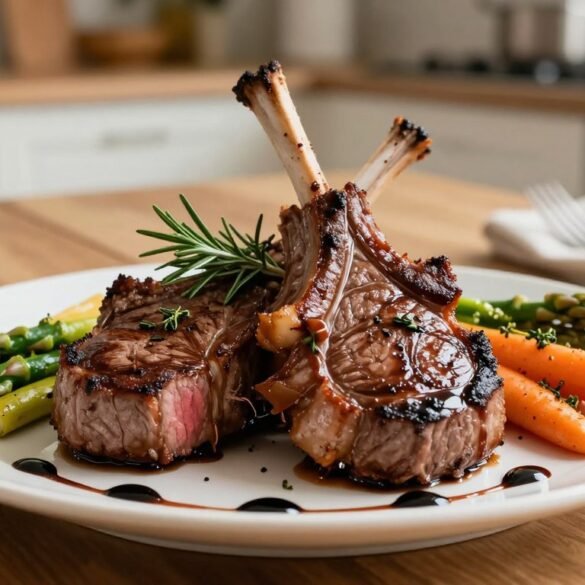
Ingredients
- 4 lamb loin steaks (chops), about 2.5 cm thick
- 1 teaspoon kosher salt
- 1 teaspoon freshly ground black pepper
- 2 tablespoons avocado oil or olive oil (high smoke point)
- 2 tablespoons unsalted butter
- 3 cloves garlic, minced
- 2 sprigs fresh rosemary
- 2 sprigs fresh thyme
- 1 tablespoon fresh lemon juice
- Garlic oil for finishing (1 clove minced garlic + 1 tbsp olive oil)
Instructions
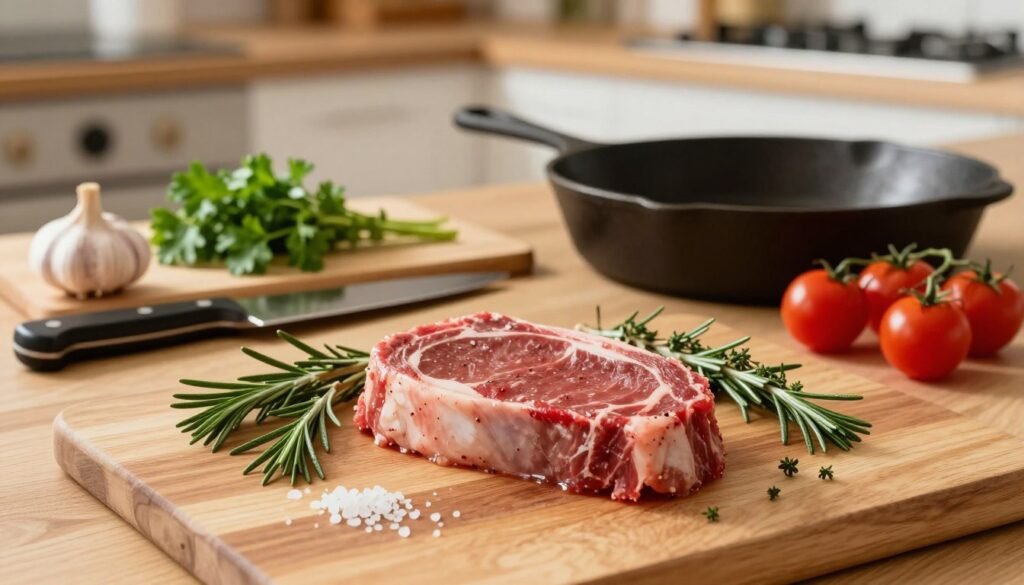
Step 1: Remove the lamb loin steaks from the refrigerator 15 to 20 minutes before cooking. Let them rest at room temperature for even cooking. Do not skip this step.
Step 2: Pat the steaks completely dry with paper towels. Season both sides generously with kosher salt and freshly ground black pepper. Press the seasoning firmly into the meat.
Step 3: Heat a cast-iron skillet over high heat for 3 to 4 minutes until it is screaming hot. Add the avocado or olive oil and swirl to coat the surface.
Step 4: Place the lamb loin steaks in the skillet without overcrowding. Sear undisturbed for 3 to 4 minutes until a deep golden brown crust forms on the first side. Do not move them.
Step 5: Flip the steaks and sear the second side for another 3 minutes.
Step 6: Reduce heat to medium. Add the butter, garlic, rosemary, and thyme to the pan. As the butter melts and foams, tilt the skillet and continuously spoon the hot butter over the tops of the steaks for 1 to 2 minutes.
Step 7: Check the internal temperature with a meat thermometer. Remove from heat at 54°C (130°F) for medium-rare or 57°C (135°F) for medium — the residual heat will raise it another 5°C during resting.
Step 8: Transfer to a cutting board and tent loosely with foil. Rest for 5 minutes before serving.
Step 9: Finish with a squeeze of fresh lemon juice and a drizzle of garlic oil. Serve immediately with your choice of sides.
Notes
Always bring the steaks to room temperature before cooking — cold meat causes the outside to burn before the inside cooks through. A cast-iron skillet is essential — it holds heat evenly and creates a proper crust that non-stick pans cannot achieve. Medium-rare at 54–57°C (130–135°F) is the ideal doneness for lamb loin steaks — beyond medium they become dry and tough. Never overcrowd the pan — cook in batches if needed, as steaming instead of searing ruins the crust. Butter basting in the final stage is not optional — it adds enormous flavor and a glossy, restaurant-quality finish. Fresh rosemary and thyme are far superior to dried for this recipe — their aroma infuses into the butter beautifully. Leftovers keep in the fridge for up to 4 days — reheat covered in a 150°C (300°F) oven to retain moisture. For a sophisticated variation, add a splash of cognac to the pan juices after cooking and swirl with butter for a restaurant-style pan sauce.
Preparing and Seasoning Your Lamb
Before the pan even gets hot, your most important task is to build a foundation of flavor. This step transforms the natural qualities of the meat into something extraordinary.
Simple Seasoning Techniques
Start with a generous amount of kosher salt and freshly ground black pepper. Coat both sides evenly to ensure a deep, savory profile.
This basic combination enhances the meat’s inherent richness without overpowering it. The right amount of salt and pepper is crucial for taste.
Herbs and Spices for Enhanced Flavor
Fresh herbs like rosemary and thyme add an aromatic layer that elevates the dish. Each herb contributes its unique character.
For a bright finish, a squeeze of fresh lemon juice cuts through the richness. Avoid dried spices when fresh herbs are available for a more vibrant flavor.
Consider making a simple garlic oil by mingling minced cloves with olive oil. A robust herb like rosemary stands up well to high heat.
Searing and Pan-Cooking Methods
The sizzle of meat hitting a properly preheated surface is the sound of flavor being locked in. This critical phase defines the texture and taste of your entire dish.
It’s less about fancy tools and more about mastering a few non-negotiable principles. The right equipment and technique will give you that beautiful, deep brown crust every time.
Using a Cast Iron Skillet
A cast iron skillet is highly recommended for this job. Its incredible heat retention ensures an even, consistent temperature across the entire cooking surface.
This even heat is what helps develop a gorgeous crust without burning. A heavy-bottomed pan like this is the secret to a professional-grade sear at home.
Achieving that Perfect Sear
First, ensure your cast iron skillet is screaming hot. Add a high-smoke point oil, like avocado or refined olive oil, to prevent burning.
Do not overcrowd the skillet. Giving each piece enough space ensures they sear properly instead of steaming.
Once placed in the hot pan, let the protein cook undisturbed for 3 to 4 minutes. This patience forms the signature, caramelized exterior crust you’re after.
Achieving the Ideal Internal Temperature
The difference between a dry, tough meal and a tender, succulent one is just a few degrees. Mastering the final internal temperature is what separates a good dinner from a great one.
Temperature Guidelines for Medium-Rare and Beyond
The USDA recommends a safe temperature of 145°F. Many professional chefs, however, target 130-135°F for superior texture and juiciness.
For a perfect medium-rare result, aim for an internal reading between 130 and 135 degrees. If you prefer your meat cooked to medium, look for 135 to 140 degrees.
Always remove your protein from the heat 5 to 10 degrees early. The residual heat will continue to cook it during the essential resting phase.
Using a Digital Thermometer Effectively
Your digital thermometer is your best tool for precision. Insert the probe into the thickest part of the meat, being careful to avoid any bone.
Hitting the bone can give a false internal temperature reading. This simple technique is the most reliable way to guarantee a perfectly cooked, never-dry result every time.
Finishing Touches for Maximum Flavor
The rich, glossy finish you see on restaurant plates is often the result of a technique called basting. This final step is where you layer on decadent, aromatic notes that make every bite memorable.
Basting with Butter and Fresh Herbs
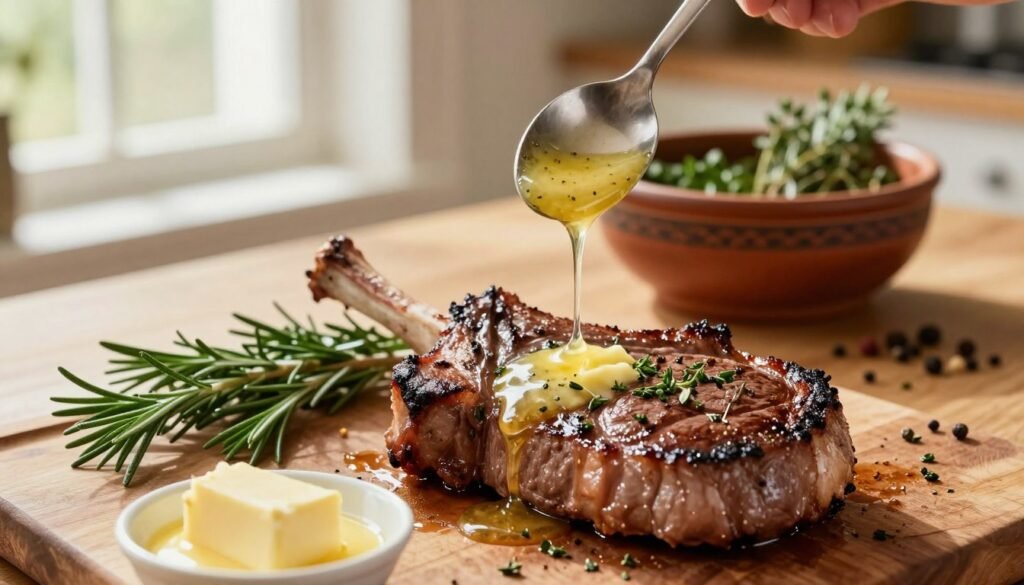
In the last minute or two of cooking, add a generous tablespoon of butter to the hot pan. Toss in a few sprigs of fresh rosemary or thyme. The butter will foam and mingle with the pan juices and herbs, creating an instant sauce.
Immediately tilt the pan. Use a spoon to continuously pour this hot, fragrant butter over the top of your protein. This constant bathing cooks the aromatics and coats the meat in a luxurious, flavor-packed glaze.
Once removed from the heat, let it rest undisturbed. This pause is non-negotiable for juicy, tender results.
This simple act transforms your seared chop. You get a dish bursting with rich, buttery, and herbal notes that feel truly gourmet.
Serving Suggestions and Side Pairings
Choosing the right accompaniments can elevate your main dish from a simple dinner to a memorable dining experience. The final plate is where flavor, texture, and visual appeal come together.
You want sides that complement without competing. A balanced plate highlights your perfectly cooked protein.
Complementary Side Dishes
Crispy smashed potatoes or creamy mashed potatoes are classic, foolproof choices. They provide a comforting, starchy base that soaks up savory juices beautifully.
For added texture and freshness, consider these options:
- Air fryer asparagus with a squeeze of lemon
- A shaved Brussels sprouts salad with a tangy vinaigrette
- A light berry spinach salad for a low-carb dinner base
The rich, meaty flavor of your chops pairs well with sides that offer a contrast. A bright, herby chimichurri sauce is a fantastic way to cut through the richness.
Wine and Beverage Pairings
The bold character of this protein stands up well to many red wines. A medium-bodied Syrah or a fruit-forward Zinfandel can be excellent matches.
For a non-alcoholic option, a sparkling water with citrus or a tart cherry juice provides a refreshing contrast. The goal is to find a drink that cleanses the palate between each savory bite.
Quick Tips and Common Pitfalls
Knowing what not to do is just as important as mastering the right techniques for a juicy result. A few small oversights can turn a promising dinner into a tough, dry disappointment.
Avoiding Overcooking and Dry Meat
One major error is starting with cold chops straight from the refrigerator. This causes the exterior to burn before the center cooks through. Always let your lamb rest at room temperature first for even cooking.
Using excessive heat for too long is a sure path to dry meat. Be mindful of cooking time. Even a few extra minutes can ruin a tender piece.
Leftovers are a great way to enjoy your meal twice. Cooked chops keep well in the fridge for up to four days. Reheat them gently in a 300°F oven, covered with foil, to lock in moisture.
| Pitfall | Consequence | Smart Solution |
|---|---|---|
| Cooking from Cold | Burnt outside, raw inside | Let meat sit out for 15-20 minutes before cooking |
| High Heat for Too Long | Tough, dry texture | Use a hot sear, then moderate heat to finish |
| Improper Reheating | Loss of juiciness | Use a low oven (300°F) covered with foil |
By sidestepping these common errors, you guarantee your meat stays succulent and flavorful every single time.
Recipe Variations to Explore
Don’t think of your dinner as a fixed recipe; consider it a template ready for your personal touch. Once you’ve mastered the basic sear, you can easily introduce new flavors and cooking methods.
This keeps your meals exciting and tailored to any occasion. A few simple changes create a completely different dining experience.
Incorporating Cognac Butter
For a sophisticated twist, finish your seared lamb loin chops with a cognac butter sauce. This popular variation adds a complex, rich flavor profile.
It combines brandy, garlic, and rich butter for a decadent finish. Simply swirl the ingredients into the hot pan juices after cooking.
Experimenting with Different Marinades
Brief marination can provide a fresh flavor profile. Try a simple blend of lemon zest, fresh garlic, and olive oil.
Let the chops sit in this mixture for just 30 minutes before cooking. It infuses a bright, aromatic quality without overpowering the meat.
Grill Versus Skillet Techniques
You can adapt these preparations for outdoor cooking. Preheat your grill to 375°F for a delicious, smoky finish.
Whether using a skillet or grill, maintaining the right heat is the key to success. Both methods deliver juicy, flavorful results when managed correctly.
Conclusion
Transforming simple ingredients into an impressive family meal is within your reach tonight. Mastering these recipes allows you to bring a gourmet experience to your own dinner table with ease.
By focusing on the quality of your lamb loin cut and using a digital thermometer, you ensure perfect results every time. Whether you finish your chops with a squeeze of fresh lemon or a rich cognac butter, the possibilities for flavor are endless.
Remember to always let your meat rest on the plate before serving. This ensures every bite is as juicy and tender as possible.
With just a few garlic cloves and fresh herbs, you can transform a simple dinner into a memorable feast. We hope this guide has provided you with the confidence to explore new cooking techniques and enjoy delicious lamb at home.