
There’s something special about eating a burger you made yourself. The smell of meat on the grill is amazing. The taste of your own flavors makes dinner feel like a restaurant meal.
Lamb makes burgers stand out. Its rich taste is different from beef. With the right seasonings and cooking, your burgers will impress everyone.
This guide will teach you to make perfect lamb burgers. You’ll learn how to pick the best meat and keep it juicy. By the end, you’ll be able to make amazing meals at home.
Key Takeaways
- Quality lamb meat is the foundation of any great lamb burger recipe
- Proper seasoning brings out the rich flavor of lamb without overpowering it
- Temperature control during cooking ensures juicy, perfectly cooked burgers
- The right bun and toppings complete your homemade burger experience
- Multiple cooking methods work well for lamb burgers, from grilling to pan searing
- Fresh, complementary sides enhance the overall meal
- Practice and attention to detail create consistent, delicious results
Why You Should Master the Lamb Burger
Learning to make lamb burgers opens up a world of culinary possibilities. It goes beyond traditional beef patties. Lamb adds a rich, distinctive taste that makes a simple burger into an impressive meal. Mastering this skill lets you create restaurant-quality burgers at home that impress everyone.
The journey to perfecting your lamb burger starts with understanding what makes this meat unique. Lamb has a depth of flavor that beef can’t match. This makes your homemade burgers stand out from ordinary fast-food options.
Understanding the Flavor Profile
Lamb meat has natural herbal notes and a savory richness. This creates an unforgettable taste. It works beautifully with Mediterranean spices like oregano, cumin, and garlic. The meat’s natural juiciness makes each bite tender and flavorful.
When you cook lamb burgers, the meat releases aromatic compounds. This fills your kitchen with an inviting smell. The flavor intensifies during cooking, creating a crust that locks in the juices.
Selecting Quality Meat
Your burger’s success depends on choosing the right meat. Look for ground lamb with approximately 20% fat content. This balance keeps your patties moist during high-heat cooking without becoming greasy.
Seek out pasture-raised lamb from reliable sources. This type of meat tastes cleaner and more nuanced than grain-fed alternatives. Local farms and specialty butchers often stock superior quality lamb that elevates your final dish.
| Meat Quality Factor | Impact on Your Burger | What to Look For |
|---|---|---|
| Fat Content | Keeps patties moist and juicy | Approximately 20% fat ratio |
| Pasture-Raised | Cleaner, more nuanced flavor | Local farms and specialty butchers |
| Freshness | Better texture and taste | Recently ground meat |
| Color | Indicates proper storage | Bright red without brown spots |
When selecting your meat, ask your butcher about the animal’s diet and origin. Lamb raised on grass tends to have better flavor than those fed grain supplements. Quality matters because it directly affects how your burger tastes.
Essential Ingredients for Your Lamb Burger Recipe
Creating a great burger starts with fresh, quality ingredients. These ingredients should highlight the lamb’s rich taste without overpowering it. The right mix can turn ground lamb into something truly special.
Begin with top-notch ground lamb. Then, add fresh herbs, veggies, and spices to bring out the lamb’s flavor.
Core Ingredients You’ll Need
Your lamb burger needs a few key ingredients to be perfect. These elements combine to create a burger that’s unforgettable:
- Fresh mint leaves for brightness and Mediterranean flair
- Flat-leaf parsley for a subtle herbaceous note
- High-quality sea salt to enhance the meat’s natural profile
- Freshly cracked black pepper for subtle heat and depth
- Minced garlic for savory complexity
- Shallots for sweet, mild onion undertones
Aromatic Additions That Make a Difference
Aromatics are key to a great burger. Garlic and shallots add depth that complements the lamb. They enhance the flavor without overpowering the meat.
Fresh herbs like mint and parsley add authenticity and brightness. Mint, in particular, pairs well with lamb, making your burger stand out from beef.

Ingredients
- 500g ground lamb (20% fat content)
- 2 tablespoons fresh mint leaves, finely chopped
- 2 tablespoons flat-leaf parsley, finely chopped
- 2 cloves garlic, minced
- 1 medium shallot, minced
- 1 teaspoon ground cumin
- 1/2 teaspoon ground coriander
- 1/2 teaspoon smoked paprika
- 1 teaspoon sea salt
- 1/2 teaspoon freshly cracked black pepper
- 4 brioche buns, lightly toasted
- Feta cheese, sliced tomatoes, pickled red onions, arugula for topping
- Tzatziki sauce for serving
Instructions
Step 1: Toast the cumin and coriander seeds in a dry pan over medium heat for 60 seconds until fragrant. Add the smoked paprika, remove from heat immediately, and grind using a mortar and pestle. Allow to cool completely before using.
Step 2: In a large bowl, combine the ground lamb, mint, parsley, minced garlic, shallot, cooled spice mix, salt, and pepper. Mix gently with cold hands for no more than 1 to 2 minutes. Do not overwork the meat.
Step 3: Divide the mixture into 4 equal portions and shape into patties about 1.5 cm thick. Make a small indent in the center of each patty with your thumb — this prevents them from puffing up during cooking.
Step 4: Refrigerate the shaped patties for at least 15 minutes before cooking to help them hold their shape.
Step 5: Heat a grill or cast iron skillet over high heat. Cook the patties for 4 to 5 minutes per side until a deep crust forms. Do not press down on the patties while cooking.
Step 6: Check the internal temperature — it should reach 71°C (160°F) at the thickest point. Remove from heat and let rest for 3 to 5 minutes.
Step 7: Lightly toast the brioche buns. Spread tzatziki on the bottom bun, then layer arugula, the lamb patty, feta cheese, sliced tomatoes, and pickled red onions. Add the top bun and serve immediately.
Notes
Always use lamb with around 20% fat — leaner lamb produces dry, crumbly burgers. Keep everything cold while mixing — warm fat makes the mixture greasy and loose. Never skip the resting step after cooking — it keeps the juices inside the patty. Toast the spices before grinding for a much deeper, more complex flavor. Pickled red onions take 30 minutes to make in advance — slice thinly and soak in vinegar, sugar, and salt. Feta, halloumi, and goat cheese all work well as toppings with lamb. Patties can be shaped ahead and refrigerated for up to 24 hours before cooking.
Having these ingredients ready ensures your patties will be consistently delicious. Quality is important at every step.
Preparing Your Ground Lamb Meatballs for the Grill
Getting your ground lamb meatballs ready for the grill needs careful steps. How you handle the meat before cooking greatly affects the taste. It’s important to treat the lamb gently and keep it at the right temperature.
Proper Handling Techniques
When working with ground lamb, handle it gently. Overworking the meat makes it tough and dense. Keep your hands cold and work fast to avoid the fat from warming up.
Here are key steps for safe handling:
- Keep your meat chilled until the moment it touches the grill
- Use cold hands or wear food-grade gloves when shaping
- Avoid squeezing or pressing the meat too much
- Shape meatballs gently without compacting them
- Store shaped meatballs in the refrigerator until cooking time
Temperature Control
Temperature control is key for safety and quality. The USDA says lamb must reach 160°F to kill harmful bacteria. A meat thermometer helps you cook perfectly.
Check the temperature at the thickest part of each meatball. Use the thermometer without touching the grill. This gives you accurate readings and prevents undercooked meat. Let the meatballs rest for a few minutes after cooking for better texture and moisture.
| Stage | Temperature | Action |
|---|---|---|
| Before Grilling | Below 40°F | Keep refrigerated until ready to cook |
| During Cooking | 160°F Internal | Check with meat thermometer at thickest point |
| After Cooking | Rest 3-5 minutes | Allow juices to redistribute throughout meatballs |
Following these steps ensures your meatballs are perfectly cooked. They will taste great and impress your guests every time.
Techniques for Perfectly Spiced Lamb Meatballs
Creating a great lamb meatballs recipe starts with building flavor layers. The spices you pick are key, turning simple meat into something amazing. How you season will make your meatballs taste either flat or full of flavor.
To make spiced lamb meatballs, you need to prepare your spices right. Many people add spices straight from the jar. But there’s a better way to bring out their flavor.
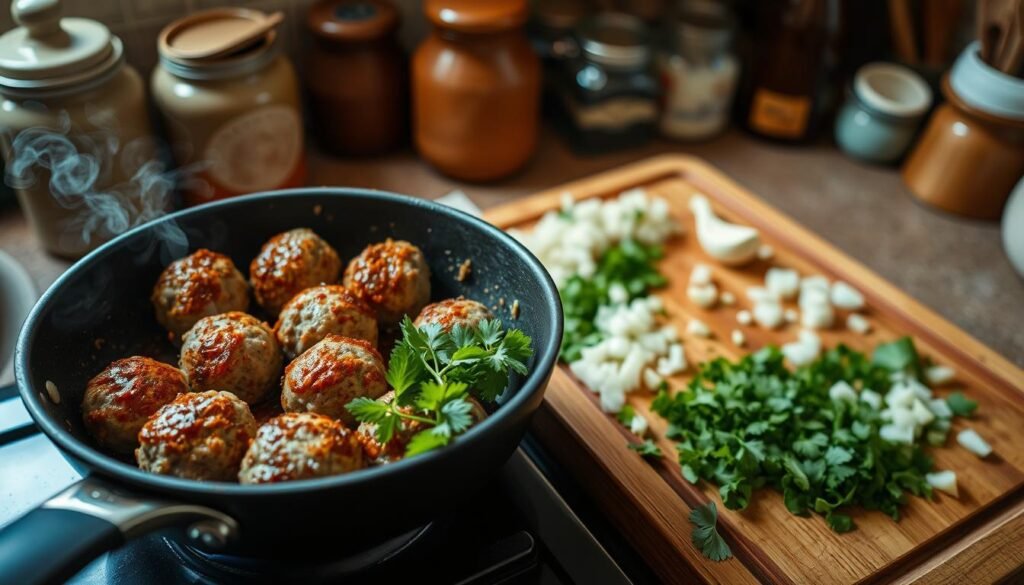
- Toast whole cumin seeds in a dry pan for 60 seconds over medium heat
- Add coriander seeds and let them warm for another 30 seconds
- Include smoked paprika and remove from heat immediately
- Grind the toasted spices using a mortar and pestle or spice grinder
- Let the ground spices cool before combining with your lamb mixture
Toasting spices releases their essential oils. This makes them aromatic and powerful. Grinding them breaks them down, so they mix well with the meat.
Timing is key. Adding hot spices can lose their flavor. Let them cool to keep their aroma. When you mix them into the lamb, every bite will be rich and balanced.
Being patient with this method makes a big difference. It turns simple meatballs into ones that wow your guests.
How to Assemble the Ultimate Burger
Putting together your lamb burger is key to a memorable meal. Every part, from start to finish, is important. It’s where all the flavors come together.
Building a great lamb burger takes careful choices. You want it to hold together and taste amazing in every bite. The right mix of ingredients turns a simple patty into something special.
Choosing the Right Bun
Your bun is the base of your burger. It needs to be strong to hold the juices without falling apart. A toasted brioche bun is great because it adds sweetness and holds moisture well.
Other good options for your burger base include:
- Sesame seed rolls with a firm structure
- Whole wheat buns for added nutrition
- Sourdough rounds for tangy depth
- Ciabatta rolls for an artisanal touch
Always toast your bun lightly. This makes a barrier against sogginess, adds flavor, and texture.
Selecting Complementary Toppings
Your toppings should balance the lamb’s rich flavor. You want something that cuts through the richness and makes the meal brighter.
Here are some topping combinations for your burger:
| Topping Category | Best Options | Why It Works |
|---|---|---|
| Cheese | Feta, Halloumi, Goat Cheese | Tangy flavor complements lamb perfectly |
| Vegetables | Pickled Red Onions, Tomatoes, Cucumbers | Fresh acidity balances rich meat |
| Sauces | Tzatziki, Harissa, Mint Yogurt | Cooling or spicy elements add complexity |
| Greens | Arugula, Lettuce, Fresh Herbs | Crisp texture and freshness enhance bite |
Pickled red onions add sharpness that balances lamb’s richness. Feta cheese adds a creamy, salty touch. A cooling tzatziki sauce complements the spiced meat perfectly.
“Great burger assembly is like composing music. Each ingredient is a note, and together they create a symphony of flavor.”
Layer your toppings carefully. Start with sauce on the bottom bun to protect it. Add your lamb patty, lettuce or greens, cheese, and pickled vegetables. Finish with the top bun and press gently.
Your assembly technique ensures every bite has all the elements you’ve chosen. You’ve now made a burger that truly satisfies.
Exploring Mediterranean Lamb Meatballs as an Alternative
Want to try something new instead of traditional lamb burgers? Mediterranean lamb meatballs are a tasty and healthier choice. They’re perfect as a main dish or part of a mezze platter, where everyone can enjoy different flavors.
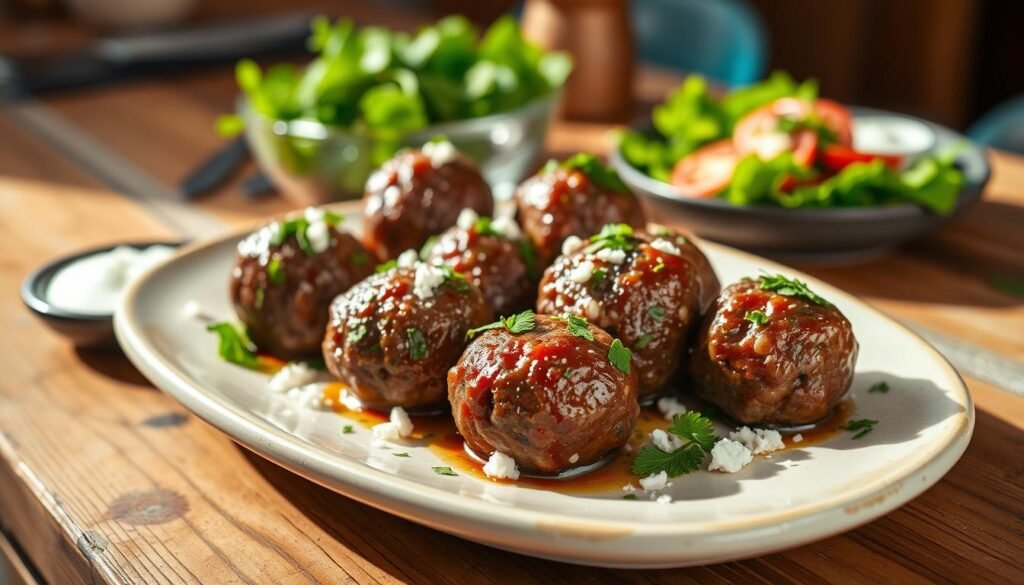
Mediterranean lamb meatballs are made with ingredients from the Mediterranean. They mix ground lamb with lemon zest, fresh oregano, and crumbled feta cheese. These ingredients create a balanced taste that’s both light and satisfying.
This method is different from making burgers. Instead of one big patty, you make small, easy-to-eat meatballs. This change makes cooking more fun and rewarding.
Key Flavor Elements
- Lemon zest adds brightness and cuts through richness
- Fresh oregano brings an earthy, aromatic quality
- Crumbled feta provides a tangy, salty contrast
- Garlic and onion build a strong flavor base
- Mint leaves offer a cool, refreshing note
These meatballs are great for many occasions. Serve them with tzatziki sauce and warm pita bread. Or, put them on a platter with olives, hummus, and roasted veggies for a full mezze experience. Your guests will love the variety and authentic taste.
Switching to meatballs opens up new ways to serve them. You can skewer them, put them in lettuce cups, or in grain bowls. This makes Mediterranean lamb meatballs perfect for any event.
Cooking Methods for Greek Lamb Meatballs
Choosing the right cooking method is key for greek lamb meatballs. You might want a deep, caramelized crust or a lighter finish. Each method brings out different flavors and textures.
Grilling Versus Pan Searing
Pan searing in a cast-iron skillet offers great heat control. It helps create a rich, caramelized crust that keeps juices in. Use medium-high heat for even browning without burning the herbs.
Grilling gives a smoky flavor and beautiful grill marks. But, you must watch the meatballs to avoid drying. It’s perfect for outdoor cooking and feeding a crowd.
Achieving the Ideal Crust
For the perfect crust, focus on temperature and timing. Here are some tips:
- Preheat your pan or grill for 3-5 minutes before cooking
- Use medium-high heat to prevent sticking
- Avoid moving meatballs too frequently during the first 2-3 minutes
- Turn meatballs only once for even browning
- Cook until internal temperature reaches 160°F
Pan searing gives a darker, crispier exterior. Grilling offers lighter browning with smoky undertones. Both methods ensure tender, juicy centers with proper heat control.
Tips for Baking Your Lamb Meatballs
Baking lamb meatballs is a simple and efficient way to cook them. It’s great for making lots of meatballs at once. You don’t have to stand over a stove or grill, giving you more time to work on other parts of your meal.
Start by preheating your oven to 400°F. This temperature helps your meatballs cook evenly and get a nice crust. Use parchment paper on your baking sheet to prevent sticking and make cleanup easier.
Place your meatballs on the prepared sheet in a single layer. Make sure they’re not too close together. This lets hot air get to all sides, ensuring they cook evenly.
Here are key steps for successful baking:
- Bake for 12 to 15 minutes depending on meatball size
- Check internal temperature reaches 160°F using a meat thermometer
- Rotate the baking sheet halfway through for even browning
- Remove from oven when meatballs feel firm to the touch
The oven method is perfect when you’re making other dishes at the same time. You can work on sauces, toppings, and side dishes while your meatballs bake. This makes baked lamb meatballs great for parties or making meals ahead of time.
Serving Suggestions for Homemade Lamb Meatballs
How you serve your homemade lamb meatballs can really make a difference. It’s all about the sauces and how you arrange everything. These two things together make for a meal that’s not just tasty but also looks great.
Creating Signature Sauces
Choosing the right sauce can take your lamb meatballs from good to great. A special sauce can add a lot of flavor that goes well with lamb. Here are some sauce ideas:
- Spicy harissa yogurt with fresh lemon juice
- Garlic-infused tahini with cumin and coriander
- Creamy tzatziki with cucumber and dill
- Pomegranate molasses with mint and sumac
- Cilantro-lime crema with jalapeño kick
Each sauce has its own unique taste. Make your sauce fresh and keep it at room temperature or a bit chilled before serving.
Plating for Presentation
How your dish looks is just as important as how it tastes. Place your meatballs on a warm platter and add some finishing touches to make it look special.
| Plating Element | Purpose | Best Choice |
|---|---|---|
| Fresh Herbs | Add color and aroma | Parsley, mint, or cilantro |
| Olive Oil Drizzle | Creates shine and richness | Extra virgin olive oil |
| Garnish Base | Supports and frames meatballs | Hummus or yogurt spread |
| Spice Topping | Adds visual depth | Sumac or paprika dust |
Begin by spreading a creamy sauce on your platter. Place your meatballs in the middle and sprinkle fresh herbs on top. Finish with a drizzle of quality olive oil. This simple method makes your dish look inviting and professional, impressing your guests before they even take a bite.
Pairing Sides with Lamb Kofta Meatballs
Choosing the right side dishes makes your lamb kofta meatballs a complete meal. Look for sides that match the meat’s rich flavors without overpowering them. Your goal is to find freshness and balance for a memorable meal.
Crisp salads are great with lamb kofta meatballs. A cucumber and tomato salad with fresh herbs adds coolness. Lemon juice or vinegar cuts through the savory spices nicely. For a touch of sophistication, try an arugula salad with olive oil and lemon.
- Fluffy couscous seasoned with lemon juice and fresh parsley
- Warm pita bread for wrapping your meatballs
- Fragrant rice pilaf with toasted nuts
- Roasted potatoes with garlic and herbs
- Bulgur wheat salad with pomegranate seeds
Bread is key when serving lamb kofta meatballs. Soft pita bread is perfect for wraps. Grilled naan adds smokiness, while toasted flatbread offers texture.
| Side Dish | Flavor Profile | Best Pairing Style |
|---|---|---|
| Cucumber Tomato Salad | Fresh, light, acidic | Refreshing contrast |
| Couscous with Lemon | Mild, citrusy, fluffy | Neutral base |
| Pita Bread | Warm, slightly chewy | Wrapping vessel |
| Roasted Vegetables | Caramelized, earthy | Textural variety |
| Tzatziki Sauce | Cool, creamy, tangy | Cooling element |
Yogurt-based sauces are also great sides. Tzatziki offers cool relief and creamy texture. Greek yogurt with garlic and herbs is another excellent choice. These sauces add to the overall flavor of your meal.
The secret to perfect side pairing is balance. Your lamb kofta meatballs will shine with sides that are fresh, light, and complementary. These sides should support and enhance the main dish without overpowering it.
Conclusion
You now know how to make restaurant-quality lamb burgers at home. Learning these recipes lets you enjoy global flavors in your kitchen. Every step, from choosing the best meat to mastering cooking, is important.
Using quality ingredients and controlling the temperature will make your burgers taste great every time. The lamb burger and its meatball versions are very versatile. You can grill, sear, or bake them.
Pair your burgers with Mediterranean sides, special sauces, and toppings. This lets you make each meal your own. You can change things up to fit your taste and the event.
Keep this guide handy for all your lamb cooking. Try out different spices, buns, and toppings to find your favorite burger. As you get better, you’ll feel more confident in the kitchen. Your loved ones will love the tasty meals you make.
Start cooking today and see all the amazing things you can do with lamb. It will bring endless possibilities to your meals.