
There’s a moment at the family table when a simple pour can change everything. You remember it—the warmth, the laughter, the deep comfort that comes from a meal made with care.
That feeling is what we’re after. This guide is your path to creating that restaurant-quality sauce right in your own kitchen. Beef Gravy Recipe
Author notes from Superman Cooks highlight a swift 10-minute cook time. Each half-cup serving brings about 76 calories and 476.5 mg of sodium, so you can savor it mindfully.
Mastering this skill turns your pan drippings into a silky, savory masterpiece. It’s the finishing touch that makes a holiday roast or a weeknight dinner feel truly complete.

Ingredients
- 2 tablespoons unsalted butter
- 2 tablespoons all-purpose flour
- 480ml (2 cups) good quality beef broth or beef stock
- 1 teaspoon Worcestershire sauce
- Salt and black pepper to taste
- Optional: 1 tablespoon pan drippings from roasted or pan-seared beef (replaces or supplements the butter for deeper flavor)
- Optional: ¼ teaspoon garlic powder
- Optional: ¼ teaspoon onion powder
Instructions
Step 1: Heat a medium saucepan over medium heat. Add the butter (and pan drippings if using) and let it melt completely, swirling the pan gently. Do not let it brown.
Step 2: Add the flour all at once and whisk immediately and constantly for 1 to 2 minutes. The mixture will form a thick paste — this is the roux. Keep whisking and cooking until it turns a light golden color and smells slightly nutty. Do not rush this step — cooking out the raw flour flavor is essential.
Step 3: Slowly pour in about one quarter of the beef broth while whisking constantly. The mixture will look very thick — keep whisking to smooth it out completely before adding more liquid.
Step 4: Gradually add the remaining broth in a slow, steady stream, whisking continuously. Adding it slowly prevents lumps from forming.
Step 5: Add the Worcestershire sauce, garlic powder, and onion powder if using. Stir to combine.
Step 6: Increase heat slightly and bring the gravy to a gentle simmer. Cook for 3 to 5 minutes, stirring frequently, until the gravy has thickened to your desired consistency.
Step 7: Taste and season with salt and black pepper. If the gravy is too thick, whisk in a splash more broth. If too thin, simmer for another 1 to 2 minutes.
Step 8: Serve immediately poured generously over mashed potatoes, roast beef, steak, chicken, or meatballs.
Notes
The roux is everything — cook it for a full 2 minutes to eliminate the raw flour taste. Undercooked roux makes gravy taste starchy. Always add cold or room temperature broth to a hot roux — this prevents lumps better than adding hot liquid. Add the broth slowly — pouring it all in at once is the most common reason gravy turns lumpy. If lumps do form, press the gravy through a fine mesh sieve or blend it briefly with a hand blender. Pan drippings from roasted beef transform this gravy completely — use them whenever you have them. For a richer, darker gravy, let the roux cook a little longer until it turns a deeper golden brown before adding the broth. This recipe doubles and triples easily for larger gatherings. Leftover gravy keeps in the fridge for 3 days — reheat gently in a saucepan with a splash of broth, whisking to restore the texture. Freeze leftover gravy in ice cube trays and store the cubes in a bag — perfect for adding to sauces and stews later.
Key Takeaways
- Create a rich, savory sauce that elevates any meal in just about 10 minutes.
- Understand the simple nutritional profile, with roughly 76 calories per half-cup serving.
- Learn professional techniques for a perfectly smooth consistency every time.
- Transform basic ingredients into a deeply flavorful companion for your favorite meats.
- Gain the confidence to impress guests and make family dinners feel special.
- Build a foundational kitchen skill you’ll use for years to come.
Introduction to Homemade Beef Gravy
Forget the bland, gelatinous stuff from a jar; a truly memorable sauce is just minutes away. This specific approach delivers restaurant-quality results in just 7 minutes of total prep and cooking. You gain complete command over what goes into your food.
Why Homemade Gravy Beats the Store-Bought Version
When you make gravy from scratch, you control the quality. Expert Julie Menghini notes that using a concentrated base like Better Than Bouillon creates a deeper, richer taste than regular store-bought beef broth.
Your dinner stays free from unnecessary additives and preservatives. The flavor profile is simply superior.
The Comfort and Tradition Behind a Classic Recipe
This practice connects you to generations of cooks. They understood that a simple, savory sauce is the heart of a meal.
Learning this skill provides a genuine sense of accomplishment. It turns basic drippings into a family tradition filled with warmth.
Essential Ingredients for a Beef Gravy Recipe
Building a deep, savory masterpiece begins with selecting the right foundational elements. Your success hinges on just a few simple, high-quality ingredients.
Each one plays a specific role in creating that silky texture and rich taste you love.
The Role of Butter, Flour, and Beef Broth
Fat is your starting point. Culinary expert Amanda Scarlati highlights that fat is the first essential component. It can come from pan drippings, butter, oil, or even rendered lard.
Unsalted butter gives you control over the seasoning. It melts into a perfect base for your roux.
Flour is the magic thickener. When whisked into the hot fat, it creates a paste that absorbs liquid smoothly.
Scarlati recommends a classic ratio of 2 tablespoons of each for a perfect base. Your liquid, like a robust beef broth, then transforms this mixture.
This broth provides the savory backbone that makes your sauce so satisfying.
Drippings vs. Stock: Unlocking Deep Flavor
For the most intense taste, prioritize using meat drippings. These are the concentrated juices left in your roasting pan.
They contain caramelized bits and natural fat that unlock a deep, savory profile plain stock can’t match.
If you lack enough drippings, don’t worry. A high-quality beef broth or stock is an excellent substitute.
It ensures your final creation remains robust and delicious for every meal. The choice between them simply adjusts the depth of your flavor.
Tools & Equipment to Perfect Your Gravy
Achieving that perfect, lump-free consistency starts long before you turn on the stove. The right gear makes the process smooth and predictable.
You need tools that give you control. This prevents common frustrations and leads to a silky, professional result every time.
Choosing the Right Saucepan and Whisk
Expert Julie Menghini recommends a 2-quart saucepan. This size gives your sauce enough room to bubble and thicken without messy splashes.
A pan that’s too small is a recipe for spills. One that’s too large can make it hard to control the heat.
Your whisk is just as critical. A silicone whisk is the preferred tool. It blends flour and fat completely without scratching your pan’s surface.
This helps you create a smooth base for your beef sauce. A sturdy whisk also lets you add liquid slowly, which is the secret to no lumps.
| Saucepan Size | Best Use Case | Key Consideration |
|---|---|---|
| 1-Quart | Small, single-serving batches | Can be cramped, leading to splatter. |
| 2-Quart | Standard family meals (ideal) | Provides perfect space for whisking and thickening. |
| 3-Quart | Large holiday gatherings | Offers ample room but may dilute flavors if not filled properly. |
Having your equipment ready before you start is essential. The roux process needs your full attention. Proper tools make everything easier.
They help you maintain consistent heat. This is vital for a rich, velvety gravy that complements your beef dishes perfectly.
Mastering the Roux: The Foundation of a Smooth Gravy
Professional chefs know that the foundation of any great sauce is built in the first two minutes. This foundation is called a roux. Culinary expert Amanda Scarlati notes it’s a simple 50/50 mixture of fat and flour that thickens soups and sauces effectively.
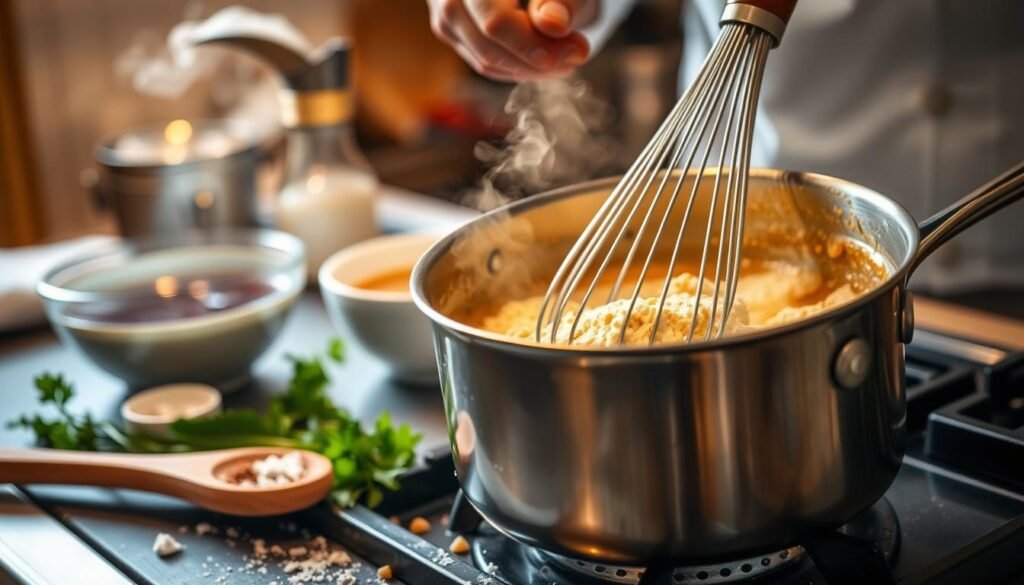
Your mission is to cook this paste. Whisk it continuously for 1 to 2 minutes. You’ll see it turn a light golden brown. This step develops a richer, nuttier flavor profile for your final creation.
Creating a Lump-Free Base for Extra Richness
The key to a silky texture is preventing lumps from the start. Always add your liquid very slowly. Maintain a steady, vigorous whisking motion the entire time.
A perfect roux should look like a thick, bubbling paste before any liquid touches it. This shows the fat and flour are fully combined. If small lumps form, don’t panic.
You can whisk more vigorously to break them up. For an absolutely silky finish, strain the sauce through a fine-mesh sieve.
| Common Mistake | Result | Quick Fix |
|---|---|---|
| Adding liquid too fast | Lumps form immediately | Whisk vigorously or strain through a sieve. |
| Not cooking flour long enough | Raw, starchy taste | Cook roux for a full 1-2 minutes until fragrant and golden. |
| Uneven heat distribution | Burnt or undercooked spots | Use medium-low heat and whisk constantly. |
| Incorrect fat-to-flour ratio | Sauce is too thick or too thin | Use equal parts by volume (e.g., 2 tbsp butter, 2 tbsp flour). |
Mastering this step gives you a smooth, powerful base. It ensures your homemade gravy has the body and richness to complement any beef dish beautifully.
Beef Gravy Recipe: Step-by-Step Cooking Process
Let’s walk through the exact process that turns butter and broth into a luxurious topping. Following these steps ensures a perfect, lump-free consistency every time.
Melting Butter and Whisking in Flour
As expert Julie Menghini instructs, start by melting butter in your saucepan over medium heat. Allow it to become completely liquid, which takes roughly one minute.
Whisk in the flour immediately to create your roux base. Cook this mixture for 1 to 2 minutes until it’s fragrant, light golden, and has a nutty aroma.
Gradual Addition of Broth for the Perfect Consistency
The key to smoothness is adding liquid slowly. Gradually pour in 3 cups of beef broth or water while whisking non-stop. This prevents any lumps from forming.
Keep the heat at a medium level. Bring the sauce to a gentle boil. Let it bubble and thicken for about 3 to 4 minutes.
You can adjust the texture easily. Add more liquid if it’s too thick. Simmer longer for a denser, richer sauce.
Enhancing Flavor: Customizing Your Gravy
Unlock new dimensions of taste by tailoring your sauce to complement any meal. The foundational method you’ve mastered is just the start. Now, infuse it with personal touches that make each dinner unique.
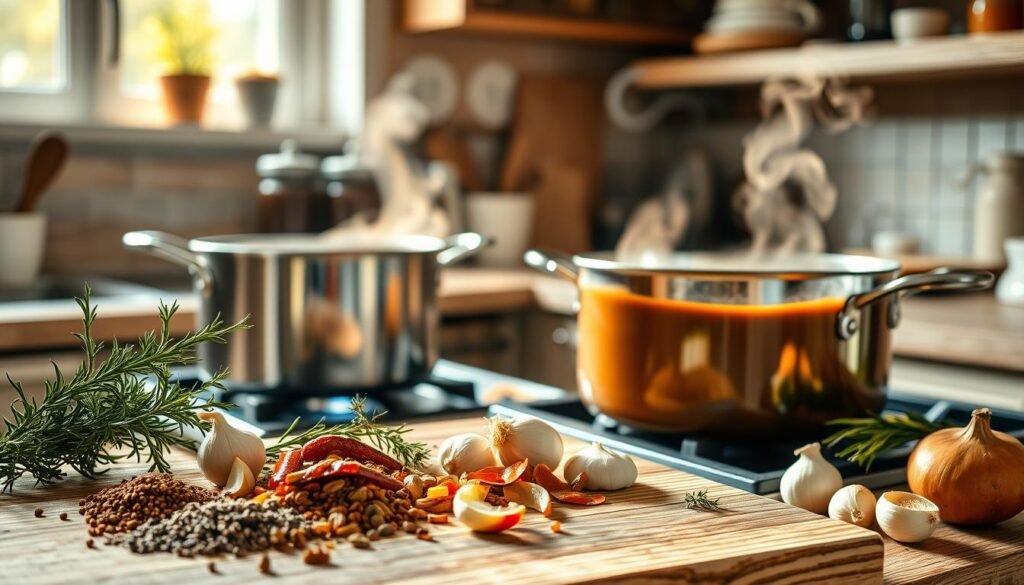
Optional Herbs, Spices, and Flavor Boosters
Expert Julie Menghini suggests adding garlic powder, paprika, or onion powder to customize the profile. These dry spices blend seamlessly into your simmering pot. A couple dashes of Worcestershire sauce provides a delicious umami kick.
It enhances the richness of meat drippings beautifully. For a mushroom variation, sauté sliced mushrooms in the butter before making your roux. This adds an earthy depth perfect for a pot roast.
A Southern-style twist uses strong black coffee for a unique red-eye version. Fresh herbs like rosemary or dried thyme offer an aromatic finish. They complement the savory notes wonderfully.
| Flavor Booster | When to Add | Contribution |
|---|---|---|
| Onion Powder | With flour in roux | Sweet, savory depth |
| Worcestershire Sauce | Stir in at the end | Umami, tangy richness |
| Fresh Rosemary | After thickening | Piney, aromatic note |
| Black Coffee | Replace some broth | Bitter, complex edge |
Always taste your creation before serving. Adjust salt and pepper levels to perfect the seasoning. These simple adjustments let you craft a signature sauce for any occasion.
Pairing Your Gravy: Perfect Complements for a Delicious Meal
Your carefully crafted creation deserves a stage that highlights its rich, savory character. The right pairing turns a good dinner into an unforgettable feast.
Pouring this luxurious sauce over creamy mashed potatoes is a classic comfort move. It creates the ultimate American home-cooked experience.
This versatile sauce also shines with hearty mains. It adds moisture and deep flavor to every slice of a tender pot roast or a classic roast beef.
For a satisfying twist, smother your meatloaf in it. You can even drizzle it over warm sourdough biscuits for a rustic brunch.
Remember, temperature is key for the best texture. Serve it steaming hot at about 160°F.
Warming your gravy boat with hot water first helps maintain that ideal heat. This keeps your mashed potatoes and meat perfectly sauced until the last bite.
A final touch of salt and pepper can perfect the seasoning. This lets the deep taste from your drippings shine through in every dish.
Storage and Reheating: Keeping Your Gravy Fresh
Great meals deserve a second act, and your homemade sauce can star in tomorrow’s dinner, too. With proper care, you can preserve its rich flavor and silky texture for future meals.
Best Practices for Refrigeration and Freezing
Pour any leftover sauce into an airtight container. You can keep it in the refrigerator for up to four days. This maintains freshness for your next dinner.
For longer storage, freezing is a great option. Pour the cooled mixture into ice cube trays. Once solid, transfer the cubes to a freezer bag. They will keep well for about three months.
This method gives you perfect, portioned servings. You can thaw just what you need for a quick meal.
Tips for Reheating Without Losing Texture
Gently warm your sauce on the stove over low heat. Add a splash of broth or water to thin it if needed. Stir it frequently for even heating.
You can also use the microwave. Heat it in 30-second bursts. Stir thoroughly between each interval. This prevents hot spots and keeps the texture smooth.
If the mixture separates after freezing, don’t worry. Just whisk it vigorously while reheating. This brings the emulsion back together for a perfect finish every time.
Troubleshooting and Pro Tips for Perfect Gravy
Even the most confident cooks can encounter a hiccup when making a rich, savory sauce. This final advice tackles common questions and provides expert solutions for a flawless result.
Common Mistakes to Avoid
To avoid common mistakes, whisk your roux constantly. This ensures the fat and flour are fully incorporated before you add any liquid. It’s the best defense against pesky lumps.
Always remember that your sauce will thicken more as it cools. Avoid over-reducing it in the saucepan to prevent a paste-like consistency.
Expert Advice for Adjusting Consistency and Flavor
If your creation turns out too thin, don’t worry. Whisk in a cornstarch slurry made from 2 tablespoons of cornstarch and a little water while it’s boiling.
You can also simply simmer it for a few extra minutes. This reduces the liquid until it reaches the perfect thickness.
If the flavor seems bland, adjust the seasoning. A pinch of salt and pepper can work wonders. For a deeper taste, stir in a concentrated base made from beef drippings or a quality stock.
Conclusion
This journey through flavor fundamentals empowers you to create comfort on demand. You can now transform simple ingredients into a rich, savory sauce that elevates every meal.
By applying these professional techniques, you gain the confidence to serve a perfectly smooth, lump-free result. It will pair beautifully with creamy mashed potatoes or a classic roast beef.
We hope this guide inspires you to make this homemade delight a regular part of your family dinner routine. With a little practice, you’ll be able to prepare it in just a few minutes of time.
Thank you for following along. We can’t wait to hear how your creation turns out with your next pot roast or holiday feast. Remember, the right seasoning makes all the difference.