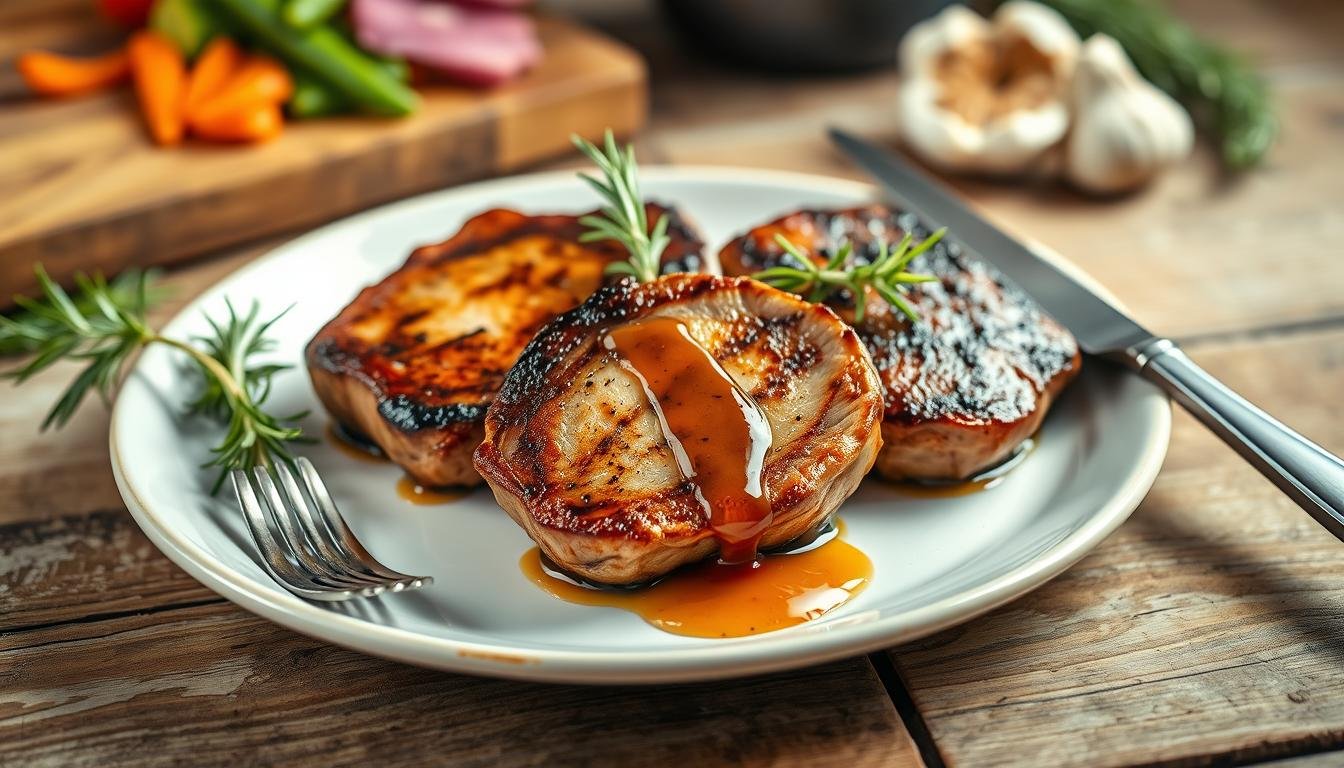
Pork chops were honestly the recipe that taught me how to cook properly. I used to make them rubbery and dry every single time — until I figured out two simple tricks that changed everything. Now they are one of my most requested weeknight dinners at home, and I genuinely make them at least twice a month. Whether you pan-sear them, bake them, or throw them on the grill, these pork chop recipes will give you juicy, flavorful results every time — ready in under 30 minutes.
Mary’s tip: The number one mistake people make with pork chops is cooking them straight from the fridge. Always let them sit at room temperature for 15 minutes before cooking — this alone makes a huge difference in how evenly they cook.
Key Takeaways
- Learn simple techniques to cook juicy and tender pork chops every time
- Prepare restaurant-quality meals in under 30 minutes
- Master the essential tools and equipment for perfect results
- Discover seasoning methods that maximize flavor
- Understand proper cooking temperatures for safe, delicious meat
- Practice pan searing techniques that professionals use
Essential Tools for Your Kitchen
Having a well-equipped kitchen is key to making tasty meals with ease. Quality cooking equipment is essential for success. The right tools make cooking faster, easier, and more fun.
Good kitchen tools help you cook safely and precisely. They let you handle food right during cooking. Quality equipment also heats evenly and lasts a long time. You’ll see a big difference with the right tools.
Choosing the Right Skillet
The skillet is your most important pan. A heavy-bottomed 12-inch cast iron skillet is great for keeping heat even. This ensures a perfect sear on your proteins every time.
Cast iron skillets get better with age and use. They develop a non-stick coating called seasoning. With basic care, your skillet can last for decades. Many people pass their cast iron skillets down through generations.
| Skillet Type | Size | Best For | Heat Retention |
|---|---|---|---|
| Cast Iron | 12 inches | Searing and high-heat cooking | Excellent |
| Stainless Steel | 10-12 inches | Everyday cooking and versatility | Good |
| Non-Stick | 8-10 inches | Delicate foods and easy cleanup | Moderate |
Must Have Kitchen Utensils
Some utensils make cooking smoother and safer. Quality utensils protect your food and cookware during prep.
- Silicone spatulas – These won’t scratch your pans and handle high heat well
- Stainless steel tongs – Perfect for flipping and moving food without piercing it
- Sharp chef’s knife – Essential for chopping vegetables and meat
- Meat thermometer – Ensures your proteins reach safe temperatures
- Wooden spoons – Great for stirring and won’t damage cookware
- Measuring cups and spoons – Helps you follow recipes accurately
Investing in high-quality silicone spatulas and stainless steel tongs ensures safe handling of food. These tools won’t scratch your cooking surfaces. Using the right utensils for each task makes cooking more enjoyable and efficient.
Selecting the Best Pork Chop Recipes
Finding the right pork chop recipes starts with understanding your meat choices. Different cuts need different cooking methods to turn out juicy and tender. The thickness of your pork chop makes a big difference in how you should prepare it. Thin cuts cook fast, while thick cuts need more time in the pan or oven.
When you explore various pork chop recipes, pay attention to the bone structure. Bone-in chops cook differently than boneless ones. The bone helps heat spread through the meat more evenly. Boneless cuts cook faster, so you need to watch them closely to avoid drying them out.
Brining and marinating are game-changers for keeping your pork moist and flavorful. These methods soak the meat in liquid, which helps it stay juicy while cooking. Most quality pork chop recipes include at least one of these steps. You should pick recipes that match your taste preferences and the time you have available.
Here are key things to think about when choosing your pork chop recipes:
- Cut thickness (thin versus thick cuts)
- Bone-in or boneless options
- Marinating or brining methods
- Cooking time and temperature needs
- Flavor profiles that appeal to you
- Kitchen equipment you own
Testing different pork chop recipes helps you learn what works best in your kitchen. Your personal taste matters most when deciding which recipes to try. Start with recipes that match your skill level and cooking style.
Preparing Mediterranean Lamb Meatballs
Making tasty Mediterranean lamb meatballs begins with the right ingredients. The quality of your ingredients is key to tender, juicy meatballs full of flavor. You must choose the best ground lamb and mix fresh herbs and spices just right.
This step is vital for your cooking success. If you get it right, your meatballs will cook evenly and taste like the Mediterranean.
Selecting Quality Ground Lamb Meatballs
When buying ground lamb, aim for an 80/20 fat-to-lean ratio. This ratio keeps your meatballs moist but not greasy. Choose lamb that’s bright red, not dark brown, for freshness.
Buy your ground lamb just before cooking. If you must store it, keep it cold for no more than two days. Ask your butcher to grind fresh lamb for you for the best quality.
Blending Fresh Herbs and Spices
The flavor of Mediterranean lamb meatballs comes from fresh herbs. Mix together:
- Fresh parsley (finely chopped)
- Fresh mint (finely minced)
- Garlic (minced)
- Ground cumin
- Ground coriander
Blend these ingredients gently into the lamb. Don’t overwork the meat, as it makes the meatballs tough. Just mix until the herbs and spices are evenly spread. This careful mixing brings out the Mediterranean taste in every bite.
“Fresh herbs transform ordinary meat into something extraordinary. Never skip this step if you want authentic results.”
Mastering Pan Searing Techniques
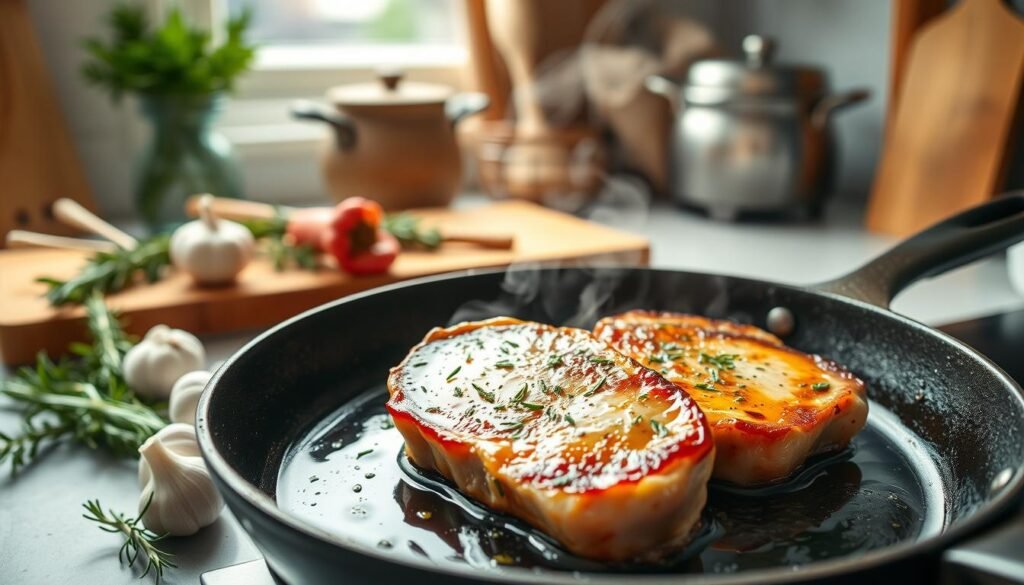
Pan searing is a key cooking skill for your kitchen. It can change how you make pork chop recipes and other dishes. The aim is to get a golden-brown crust that keeps the meat’s juices inside.
First, heat your skillet until it shimmers. This means the oil or butter should move quickly across the pan. When searing pork chops, this step is essential.
- Pat your meat completely dry with paper towels
- Season your pork chops with salt and pepper right before cooking
- Place meat into the hot pan without moving it for 3-4 minutes
- Flip only once to develop an even crust
- Let the cooked meat rest for a few minutes before serving
Don’t move your meat around while it cooks. This mistake stops a proper crust from forming. A steady heat creates that beautiful brown layer chefs aim for.
“A proper sear locks in moisture and creates incredible flavor through the Maillard reaction.”
The Maillard reaction occurs when proteins and sugars bond under high heat. It makes complex flavors you can’t get any other way. Many pork chop recipes rely on this technique for their flavor.
Creating Spiced Lamb Meatballs
Creating the perfect spiced lamb meatballs is all about warm spices. They make your dish truly special. Ground lamb is rich and pairs well with aromatic seasonings. The secret is balancing spices and cooking to make them taste like they came from a restaurant.
Developing Complex Flavor Profiles
Your spiced lamb meatballs need a mix of warm spices for depth and richness. Start with these essential seasonings:
- Cumin for earthy warmth
- Coriander for citrus notes
- Cinnamon for subtle sweetness
- Black pepper for sharp kick
- Fresh garlic for pungent flavor
When you mix ground lamb with these spices, you get layers of flavor. These flavors grow as you cook. Warm spices release oils, making the taste more complex. Mix gently to avoid tough meatballs.
Cooking Methods for Even Browning
To get golden-brown meatballs, manage heat and technique well. Use medium-high heat for the best results. This heat helps the meatballs get a nice crust without burning.
Turn your meatballs every two minutes for even browning. This prevents flat spots and ensures color is even. They’ll cook in about 10-12 minutes, depending on size.
| Heat Level | Cooking Time | Best Results |
|---|---|---|
| Medium Heat | 15-18 minutes | Even cooking, slower browning |
| Medium-High Heat | 10-12 minutes | Golden crust, juicy inside |
| High Heat | 8-10 minutes | Dark crust, risk of raw center |
Achieving Perfect Internal Temperatures
Getting the right internal temperature is key to making delicious and safe pork chop recipes. You want your meat cooked through but juicy and tender. A digital meat thermometer is your best tool for checking doneness. This simple device takes the guesswork out of cooking.
The USDA sets the safe internal temperature for pork at 145 degrees Fahrenheit. You should insert your thermometer into the thickest part of the meat, away from bone and fat. Once your pork chop recipes reach this temperature, you are done cooking. Let the meat rest for three minutes before serving or cutting into it.
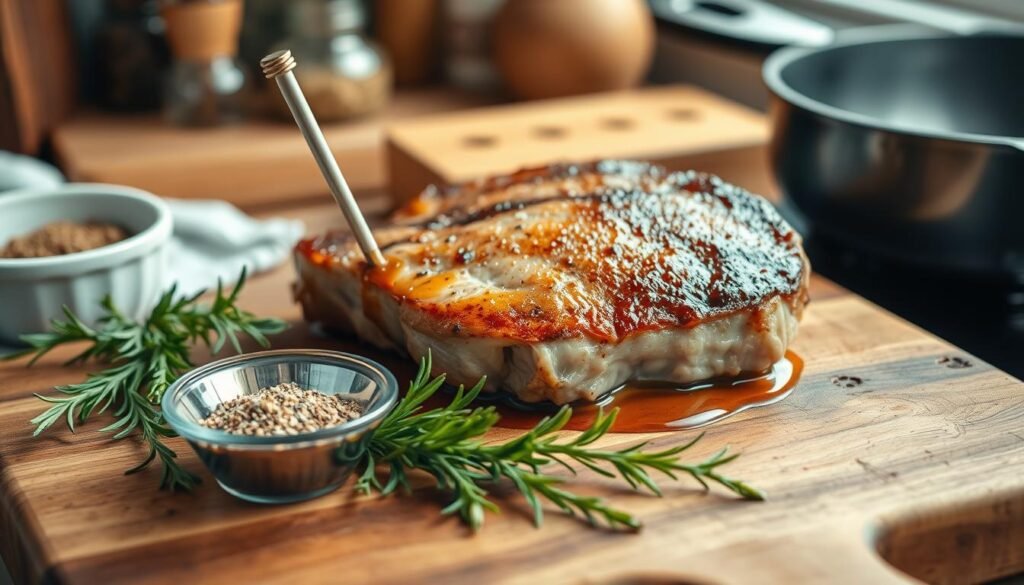
Resting your meat after cooking makes a big difference. During this rest period, the juices spread back through the muscle fibers. This keeps your pork chop recipes moist and flavorful. If you skip this step, the juices run out onto your plate instead of staying in the meat.
Here is what you need to do:
- Insert your meat thermometer into the thickest part
- Check that it reads 145 degrees Fahrenheit
- Remove the meat from heat
- Let it rest for three minutes
- Serve or slice your pork chop recipes
Using a thermometer removes all doubt about whether your meat is done. Your pork chop recipes will be safe to eat and taste much better when cooked to the right temperature.
Serving Homemade Lamb Meatballs
Perfecting your homemade lamb meatballs is just the start. How you serve them is just as important. The right sides and sauces can make your dish unforgettable. Choose sides that balance the lamb’s rich flavors with freshness and brightness.
Pairing with Fresh Sides
Fresh, vibrant sides are key to complementing your lamb meatballs. Here are some great options:
- Tabbouleh – A light salad with bulgur, parsley, tomatoes, and lemon juice
- Crisp cucumber salad with red onions and vinaigrette
- Warm pita bread for wrapping and dipping
- Roasted vegetables like zucchini and bell peppers
- Mixed greens with feta cheese and olives
These sides add cool, refreshing elements that contrast well with the warm spices in your lamb.
Creating Savory Dipping Sauces
A great dipping sauce can really elevate your meal. Here are some top choices:
| Sauce Type | Main Ingredients | Flavor Profile |
|---|---|---|
| Tzatziki | Greek yogurt, garlic, cucumber, dill | Cool and tangy |
| Harissa Yogurt | Greek yogurt, harissa paste, lemon | Spicy and creamy |
| Mint Yogurt Sauce | Greek yogurt, fresh mint, garlic | Fresh and aromatic |
Tzatziki is a classic choice for lamb meatballs. Mix Greek yogurt with garlic, cucumber, dill, and lemon juice. This cool sauce contrasts beautifully with the warm spices in your meat. Preparing these sauces ahead of time lets them develop deeper flavors, making your meal even better.
Seasoning Your Meat for Maximum Flavor
The right seasoning can turn your meat into something amazing. It’s the key to a meal that tastes like it came from a restaurant. To succeed, you need to know how to season and when to do it.
Begin with kosher salt and freshly ground black pepper. These are the basics for great flavor. Sprinkle them generously at least 15 minutes before cooking. This lets the salt work its magic on the meat’s surface.
- Pat your meat dry with paper towels before seasoning
- Sprinkle kosher salt evenly across all surfaces
- Add freshly cracked black pepper generously
- Let the meat rest for 15 to 40 minutes at room temperature
- Avoid seasoning too early, which can draw out moisture
When seasoning, be consistent. Every bite should be as tasty as the next. Season both sides and edges well. This ensures every part of your dish tastes great.
Waiting before cooking lets the salt enhance the meat’s flavor. This simple step adds depth to your meal. It works for lamb meatballs, pork chops, or any other protein you’re cooking.
Exploring Greek Lamb Meatballs
Greek lamb meatballs bring Mediterranean flavors to your dinner. They offer a taste of Greece with their spice blends and fresh ingredients. These meatballs impress everyone at the table.
These meatballs are versatile. You can pan-fry or bake them. Both methods make them tender and flavorful, perfect for many dishes.
Authentic Ingredients for Lamb Kofta Meatballs
Making lamb kofta meatballs starts with quality ingredients. Ground lamb, spices, and fresh herbs are key. Here’s what you need:
- Dried oregano for Mediterranean depth
- Fresh garlic for bold flavor
- Crumbled feta cheese for creamy richness
- Fresh mint and parsley for brightness
- Onion for texture and sweetness
- Breadcrumbs for binding
- Egg to hold everything together
Shape the mixture into long cylinders, not round balls. This shape cooks evenly and keeps them moist. It’s also great for skewers.
Tips for Baked Lamb Meatballs
Baking is a convenient way to cook meatballs. It’s less work than stovetop methods, making it easier to prepare meals.
Preheat your oven to 400°F. Place the meatballs on a lined baking sheet, leaving space between them. Bake for 15-18 minutes until they’re golden brown and cooked through. This method ensures even browning without needing to turn them.
“Baking is the perfect solution for busy weeknights when you want restaurant-quality results without constant attention.”
Both cooking methods make delicious Greek lamb meatballs. Choose the one that fits your schedule and cooking style.
Storing and Reheating Your Leftovers
Your homemade lamb meatballs need the right care after cooking. Storing them correctly keeps them fresh and safe for several days. This guide shows you how to keep your meatballs in great shape.
Keeping your meatballs fresh starts with quick cooling and proper storage. Let them cool to room temperature first. Then, put them in an airtight container. This stops bacteria from growing and keeps your food safe.
Refrigerate them right away to keep them fresh.
Storage Guidelines for Your Meatballs
- Store cooked meatballs in airtight containers
- Keep them in the refrigerator for up to three days
- Label your container with the date you cooked them
- Use glass or plastic containers that seal tightly
- Keep your refrigerator at 40°F or below
When reheating, add a bit of water or broth to your container. This helps prevent your meatballs from drying out. The moisture keeps them tender and juicy.
Reheating Methods
| Method | Temperature | Time |
|---|---|---|
| Microwave | Medium setting | 2-3 minutes |
| Oven | 350°F | 8-10 minutes |
| Stovetop | Medium heat | 5-7 minutes |
Stir your meatballs halfway through reheating. This ensures they heat evenly. Your leftovers will taste great if you handle them with care.
Conclusion
You now have the tools and knowledge to create amazing dishes in your own kitchen. The techniques you’ve learned about temperature control, ingredient selection, and cooking methods apply to many different meals. From searing pork chops to preparing a perfect lamb meatballs recipe, the same principles guide your success.
Quality ingredients make a real difference in your cooking. When you choose fresh herbs, quality meats, and proper seasonings, your food tastes better. Your family and friends will notice the care you put into each dish. These cooking skills build your confidence for trying new recipes and experimenting with bold flavors.
Start using these techniques today in your kitchen. Pick a recipe that excites you. Take your time with each step. Pay attention to how your food looks, smells, and tastes as it cooks. You have everything you need to prepare delicious, restaurant-quality meals at home.