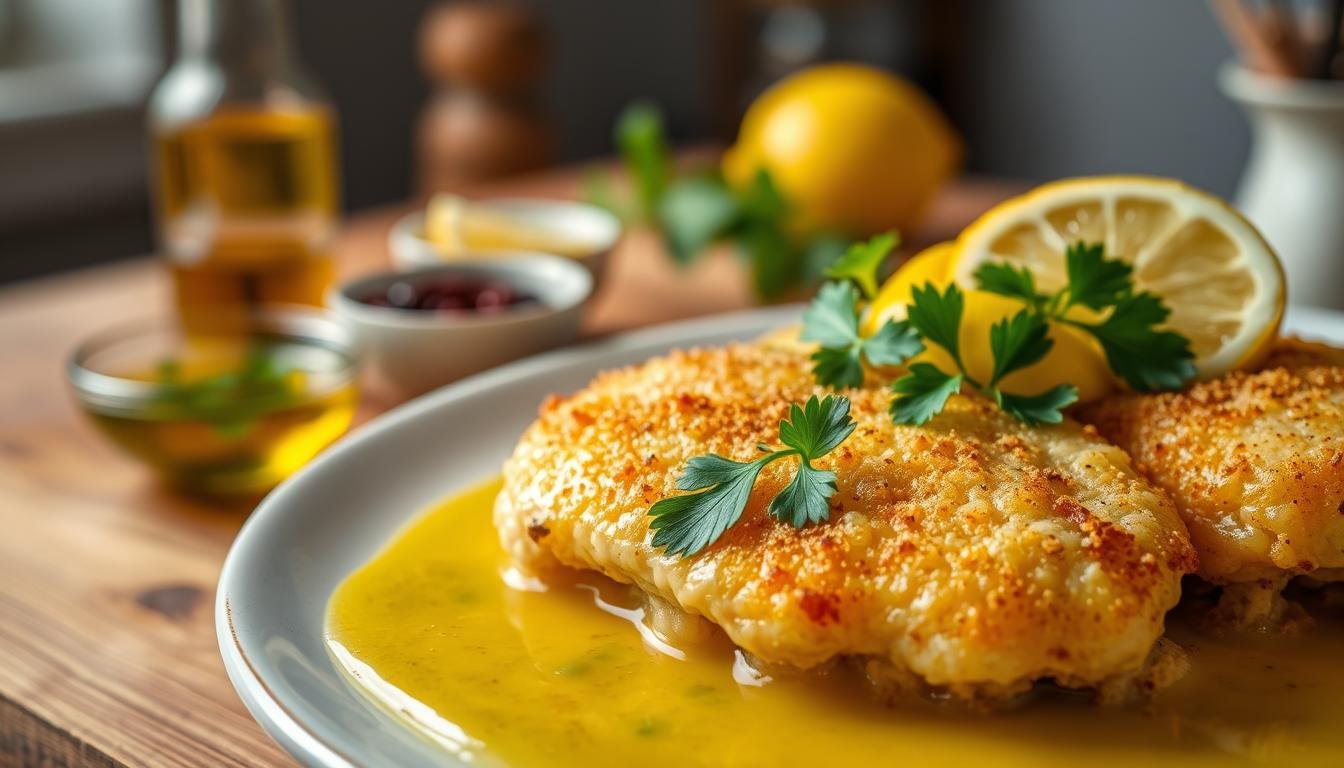
Sitting down to Chicken Francese is magical. The crispy outside meets tender meat inside. A lemon butter sauce adds warmth and flavor to every bite.
This dish brings back family dinners and favorite Italian restaurants. It makes you feel like you’ve traveled, even in your own kitchen.
Making Chicken Francese at home is easy. You don’t need fancy skills or rare ingredients. It’s ready in about 30 minutes. Simple techniques make it taste like a restaurant dish.
Chicken Francese is a top Italian chicken recipe. The egg-battered chicken gets that golden crust. The lemon butter sauce adds brightness and richness.
Ingredients
- For the chicken:
- 4 boneless skinless chicken breasts, sliced thin or pounded to 1/4 inch thickness
- 1/2 cup all-purpose flour for dredging
- 3 large eggs
- 2 tablespoons water
- 1/2 teaspoon salt
- 1/4 teaspoon black pepper
- 3 tablespoons olive oil for pan frying
- For the lemon butter sauce:
- 1/2 cup dry white wine
- 1/3 cup fresh lemon juice (about 2 to 3 lemons)
- 1/2 cup chicken broth
- 4 tablespoons cold unsalted butter, cut into small cubes
- 2 cloves garlic, minced
- Salt and black pepper to taste
- For garnish:
- Fresh Italian parsley, finely chopped
- Thin lemon slices
Instructions
Step 1: Slice each chicken breast horizontally into thin cutlets, or place between two sheets of plastic wrap and pound with a meat mallet to an even 1/4 inch thickness. Even thickness is essential for fast, uniform cooking.
Step 2: Set up your dredging station. Place the flour in one shallow bowl. In a second bowl, whisk together the eggs, water, salt, and pepper until fully combined.
Step 3: Working one at a time, coat each chicken cutlet in flour and shake off the excess. Then dip it into the egg mixture and let the excess drip back into the bowl. Set aside on a plate.
Step 4: Heat the olive oil in a large skillet over medium-high heat until shimmering. Cook the chicken cutlets in batches — do not overcrowd the pan. Fry for 3 to 4 minutes per side until golden brown and cooked through to 74°C (165°F). Remove and set aside on a warm plate.
Step 5: Pour off excess oil from the pan, leaving about 1 tablespoon. Add the minced garlic and cook for 30 seconds until fragrant. Pour in the white wine and use a wooden spoon to scrape up all the browned bits from the bottom of the pan.
Step 6: Add the chicken broth and fresh lemon juice. Stir to combine and simmer for 2 to 3 minutes until the sauce reduces slightly.
Step 7: Remove the pan from heat. Add the cold butter cubes one or two at a time, whisking constantly until each piece melts completely before adding the next. This creates the silky, glossy lemon butter sauce. Work quickly — the pan must be off the heat for this step.
Step 8: Return the chicken cutlets to the pan and spoon the sauce generously over each piece. Let them sit in the sauce for 1 minute to absorb the flavors.
Step 9: Transfer to a serving plate, spoon the remaining sauce on top, and garnish with fresh parsley and thin lemon slices. Serve immediately.
Notes
Always use cold butter straight from the fridge for the sauce — warm butter will not emulsify and the sauce will separate. Whisk the butter in off the heat — adding butter to a boiling pan breaks the emulsion and leaves you with a greasy, split sauce. Fresh lemon juice only — bottled lemon juice tastes flat and does not give the bright, vibrant flavor this dish needs. Do not overcrowd the pan when frying — cook in two batches if needed to ensure a proper golden crust on every piece. Thin, even cutlets are essential — thick uneven chicken will burn on the outside before cooking through. Serve Chicken Francese immediately — the sauce can separate and the coating can soften if left sitting too long. Dry white wine like Pinot Grigio or Sauvignon Blanc work best — avoid sweet wines which make the sauce cloying. Leftovers keep in the fridge for up to 3 days but the coating will soften — reheat gently in a pan over low heat.
Key Takeaways
- Chicken Francese is a quick meal that takes about 30 minutes from start to finish
- The egg-battered chicken technique creates the signature golden, crispy exterior
- A bright lemon butter sauce brings authentic flavor to this italian-american classic
- Chicken cutlets work best because they cook fast and stay tender
- This pan-fried chicken breast dish works perfectly for busy weeknight dinners
- Simple ingredients and basic kitchen tools are all you need to succeed
Understanding the Appeal of Chicken Francese
Chicken Francese is a favorite in American kitchens for many reasons. It’s a classic dish that wins hearts in both homes and restaurants. Its charm comes from a mix of simplicity and elegance.
The dish’s beauty lies in its delicate balance of textures. Unlike heavy, fried foods, Chicken Francese highlights the chicken’s natural tenderness. The meat stays moist and juicy, never dry or tough. It looks elegant on the plate, thanks to its simple cooking methods.
The vibrant lemon butter sauce makes the dish unforgettable. It adds a bright, zesty flavor that’s both light and refreshing. This acidity balances the richness of the butter and egg coating perfectly. The sauce brings everything together in a beautiful harmony.
Let’s explore what makes Chicken Francese stand out:
- Achieves a crispy exterior while maintaining tender, juicy meat inside
- Requires basic pantry ingredients you likely already own
- Takes less than 30 minutes from start to finish
- Works for both weeknight dinners and special occasions
- Impresses family and friends with restaurant-quality results
This dish is a hit in American homes because it offers a taste of restaurant dining at home. The cooking process is easy, and the presentation is impressive. Whether you’re cooking for yourself or guests, Chicken Francese is a sure winner.
Essential Ingredients for Your Kitchen
Before you start cooking chicken francese, gather all your ingredients. Having everything ready makes the cooking process smoother and faster. You’ll need items from your pantry and fresh produce to create this delicious dish. Being organized helps you focus on cooking instead of searching for supplies.
Pantry Staples
Your pantry should contain several key items for this recipe. These ingredients form the base of your lemon butter sauce and the coating for your chicken. Stock up on these essentials before you begin cooking:
- All-purpose flour for dredging the chicken cutlets
- Dry white wine for the sauce base
- High-quality olive oil for pan-frying
- Unsalted butter for richness and flavor
- Eggs for the batter coating
- Salt and black pepper for seasoning
- Chicken broth for sauce depth
Fresh Produce
Fresh ingredients make a real difference in your final dish. Select the best quality items available at your local grocery store. These fresh elements brighten your lemon butter sauce and add vibrant flavors:
- Organic lemons for zest and fresh juice
- Fresh Italian parsley for garnish and flavor
- Garlic cloves for aromatic depth
- Fresh chicken breasts, boneless and skinless
Getting quality ingredients sets you up for success. Your pantry staples provide structure and technique, while fresh produce brings life and brightness to every bite.
Preparing the Chicken Cutlets
Getting your chicken cutlets ready is key to a great dish. When you prepare your meat right, it cooks evenly and stays tender. This is the base for a successful dish.
Begin by slicing your chicken breasts into thin, even pieces. Aim for a thickness of about 1/4 inch. This thinness ensures quick cooking, under 5 minutes on each side.
A meat mallet is your secret for professional results. Place each chicken breast between plastic wrap or parchment paper. Pound gently but firmly with the flat side of the mallet. This does several things:
- Breaks down the muscle fibers in the meat
- Creates an even thickness across the entire piece
- Helps the chicken cook at the same rate throughout
- Tenderizes the meat naturally
Work your way across the breast, using steady, overlapping strokes. You want uniform thickness, not holes or thin spots. Once all your chicken cutlets are the same thickness, you’re ready for the egg-batter coating. Proper preparation at this stage makes a big difference.
Mastering the Egg-Battered Chicken Technique
The secret to a great Chicken Francese is in the egg-battered chicken. It needs precision and care. With the right steps, you’ll get a crispy outside and a juicy inside. Let’s dive into how to turn simple chicken cutlets into a dish fit for a restaurant.
Dredging Methods
The egg-battered chicken process is easy. Start by dusting your chicken cutlets with all-purpose flour. This helps the egg stick to the meat. Then, dip each piece in a seasoned egg wash made with eggs, water, salt, and pepper.
Here’s how to set up your dredging station:
- Place flour in a shallow bowl
- Mix eggs with a splash of water in another bowl
- Coat each cutlet in flour, shaking off excess
- Dip the floured chicken into the egg mixture
- Let excess egg drip back into the bowl
Achieving the Golden Crust
Getting that golden crust is key. The egg mixture holds the flour to the chicken. When it hits hot oil, the egg proteins create a crispy, delicate layer.
Here are some tips for success:
- Use medium-high heat for even browning
- Don’t overcrowd your skillet
- Let the coating set before moving the chicken
- Cook until golden brown, about 3-4 minutes per side
This technique gives Chicken Francese its light, elegant crust. It protects the meat, keeping it juicy and full of flavor.
Creating the Perfect Lemon Butter Sauce
The sauce makes Chicken Francese truly special. After your chicken finishes cooking, you have the chance to build something magical in that same pan. The golden drippings left behind hold incredible flavor that you can transform into a luxurious coating for your dish.
Start your sauce by deglazing the pan with dry white wine. Pour it directly onto the hot surface and use a wooden spoon to scrape up all those browned bits stuck to the bottom. This step releases trapped flavors and creates the foundation for your lemon butter sauce. Let the wine simmer for about one minute to cook off the raw alcohol taste.
Next, add fresh lemon juice to brighten the sauce. The citrus brings balance and cuts through the richness beautifully. Squeeze juice from real lemons instead of using bottled versions. You need that fresh, vibrant taste that only real lemons provide.
Here comes the secret: cold, cubed butter transforms everything. Remove your pan from heat and whisk in small pieces of cold butter one at a time. This final touch creates a silky, emulsified lemon butter sauce that clings perfectly to your Chicken Francese. The butter melts into the liquid and creates a glossy, luxurious finish.
- Use cold butter straight from your refrigerator
- Cut it into small cubes for even melting
- Whisk constantly while adding each piece
- Work quickly to maintain the emulsion
Your sauce should look smooth and coat the back of a spoon. Pour this beautiful creation over your chicken immediately for best results.
Cooking the Pan-Fried Chicken Breast
Getting your pan-fried chicken breast right takes practice and attention to detail. The cooking process is key to your Chicken Francese dish. Your temperature control and oil choice are critical for a golden, crispy exterior or a burnt, bitter mess. This section covers the two most important factors for perfect results every time.
Heat Management
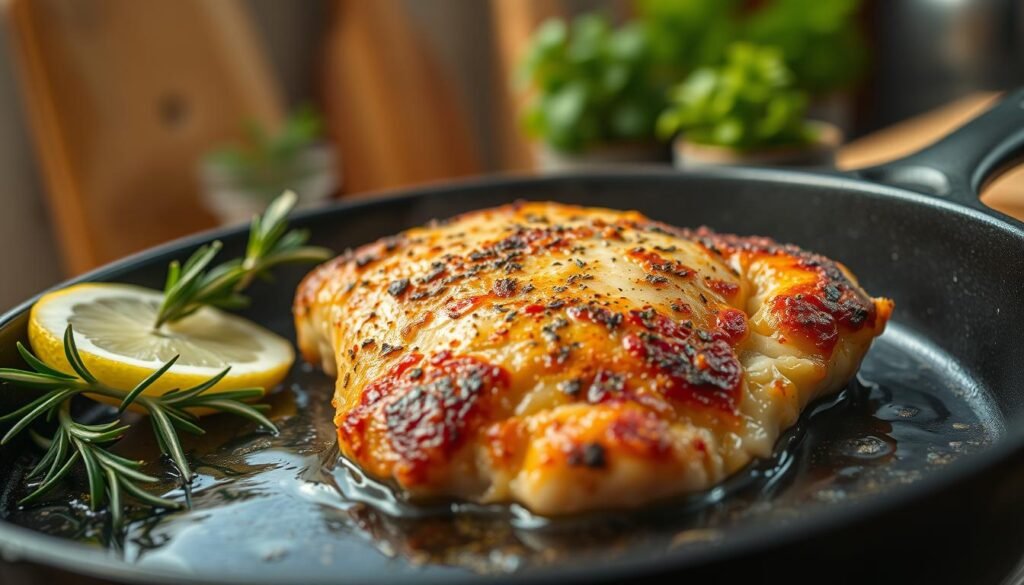
Your skillet temperature is critical when cooking egg-battered chicken. You want medium-high heat, around 350°F to 375°F. This range helps your coating brown without burning.
If your heat is too low, your chicken becomes soggy and greasy. Too high, and your coating burns before the inside cooks through.
Monitor your pan constantly. Watch for gentle sizzling when you add the chicken. The sound tells you your temperature is just right. Once you place each piece, resist the urge to move it around. Let it sit for 3-4 minutes on each side. This creates that beautiful golden crust that makes Chicken Francese so appealing.
Oil Selection
Choose an oil with a high smoke point. Avocado oil and grapeseed oil work best. Both handle high temperatures without breaking down. Regular vegetable oil burns at lower temperatures and creates unpleasant flavors.
- Avocado oil: Smoke point around 520°F
- Grapeseed oil: Smoke point around 420°F
- Vegetable oil: Smoke point around 400°F (less ideal)
Use about two tablespoons of oil per two chicken cutlets. Your pan-fried chicken breast needs enough oil to cook evenly without becoming oil-logged. The right oil and temperature combination ensures your egg-battered chicken develops a crispy exterior while staying tender inside.
Serving Suggestions for Authentic Italian-American Cuisine
Serving Chicken Francese right makes your meal special. How you present it is as important as cooking it. Choosing the right sides and plating can make your dish unforgettable.
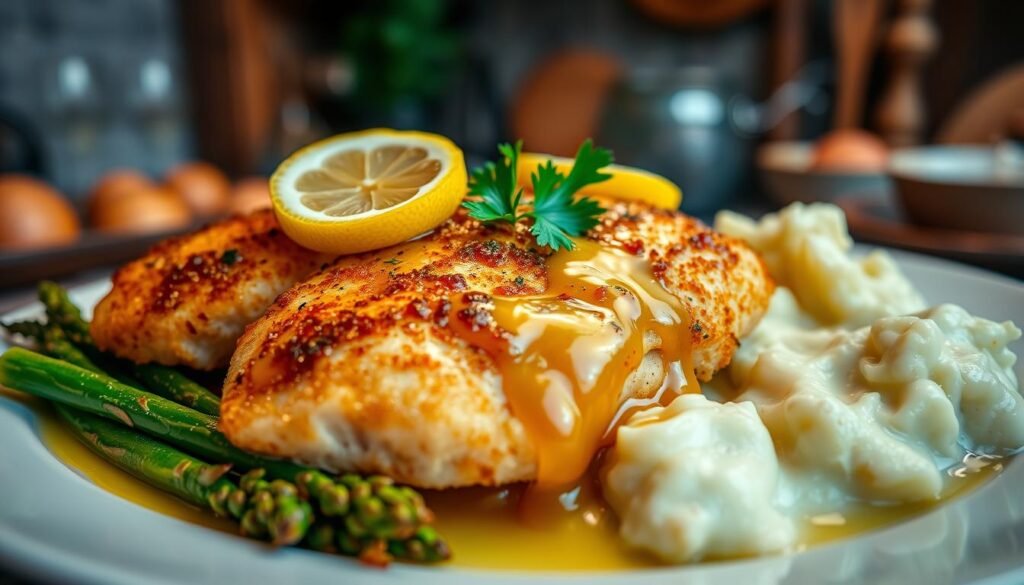
The lemon butter sauce is key in serving this dish. Drizzle the sauce over the chicken and sides. This brings all the flavors together beautifully.
- Al dente linguine – Fresh pasta that absorbs the lemon butter sauce perfectly
- Roasted asparagus – A light vegetable that balances the richness of the sauce
- Garlic bread – Crusty bread for soaking up extra sauce
- Mixed green salad – A fresh contrast to the warm, buttery chicken
- Roasted potatoes – A heartier option for filling side dishes
Here are some tips for presenting Chicken Francese like a pro:
| Serving Component | Best Practice | Flavor Benefit |
|---|---|---|
| Pasta Portion | One cup cooked linguine per plate | Captures sauce elegantly |
| Chicken Placement | Center the cutlet on pasta bed | Creates visual appeal |
| Sauce Distribution | Pour remaining lemon butter sauce over everything | Enhances all elements uniformly |
| Garnish Choice | Fresh parsley and lemon wedges | Adds freshness and visual contrast |
| Wine Pairing | Pinot Grigio or Sauvignon Blanc | Complements bright lemon flavors |
The way you present Chicken Francese sets the meal’s mood. Warm your plates and garnish with fresh parsley and lemon wedges. Your guests will love the care you put into serving this traditional dish.
Why This Dish is a Great Chicken Piccata Alternative
Looking for a chicken piccata alternative? Chicken Francese is a great choice. It offers a similar dining experience but with its own twist. Both dishes feature bright citrus flavors and tender chicken, but in different ways.
White wine chicken dishes are common in Italian-American cooking. Chicken Francese stands out with its egg-battered technique. This method gives the chicken a richer, more luxurious texture that many prefer.
Flavor Profiles
Both dishes love lemon and white wine, creating bright, acidic notes. Chicken Francese adds depth with its egg coating. Your taste buds will enjoy a richer, buttery taste while keeping that citrus brightness.
| Feature | Chicken Francese | Chicken Piccata |
|---|---|---|
| Main Coating | Egg batter | Flour dredge |
| Sauce Base | Lemon butter with white wine | Lemon butter with capers |
| Crust Texture | Soft and absorbent | Crispy and thin |
| Richness Level | Rich and creamy | Light and tangy |
Texture Differences
The egg batter in Chicken Francese makes a delicate, tender crust that soaks up sauce well. This is different from the crispier flour coating of chicken piccata. When you eat Francese chicken, the outside is soft, making each bite smooth.
Choosing Chicken Francese means enjoying a dish that’s both elegant and comforting. Your family will love the tender chicken and creamy sauce in every bite.
Tips for Achieving Tender Chicken Scaloppine
Getting tender chicken scaloppine starts with knowing how fast thin meat cooks. The secret is in quick timing and keeping the right temperature. Your chicken cutlets will go from raw to perfectly cooked in just a few minutes. So, it’s key to watch them closely while cooking.
The main rule for tender chicken scaloppine is not to overcook it. Thin scaloppine pieces lose moisture fast when cooked too long. A chicken breast cooked too long becomes dry and tough, not tender and juicy. Take your meat off the pan as soon as it hits 165 degrees Fahrenheit.
- Use a meat thermometer to check the internal temperature of your chicken cutlets
- Cook on medium-high heat for fast, even cooking
- Flip the pan-fried chicken breast only once during cooking
- Let the meat rest for 2-3 minutes after cooking stops
- Avoid pressing down on the cutlets while they cook
Temperature control is key to avoiding dry chicken scaloppine. Take your meat off the heat when it hits 165 degrees Fahrenheit internally. Carryover cooking will slightly raise the temperature as it rests. This way, your chicken stays moist and full of flavor every time.
Storing and Reheating Your White Wine Chicken
Your delicious white wine chicken needs the right care after cooking. Leftovers can stay fresh and tasty with smart storage and reheating. These methods let you enjoy your meal more than once without losing quality.
Proper Storage
Once your Chicken Francese cools, put it in an airtight container. Place it in the fridge right away. Your white wine chicken will stay fresh for up to three days if stored right.
Remember these storage tips:
- Let the dish cool completely before refrigerating
- Use glass or plastic containers with tight-fitting lids
- Store the chicken and sauce together for best flavor
- Keep your refrigerator at 40°F or below
- Label containers with the date you prepared the dish
Reheating Techniques
Bring your stored chicken back to life with the stovetop method. Put your Chicken Francese in a skillet and set the heat to low. Add a splash of chicken broth to prevent the sauce from breaking apart.
Follow these reheating steps:
- Heat your skillet over low to medium-low temperature
- Pour in your white wine chicken carefully
- Add 2-3 tablespoons of chicken broth to the pan
- Stir gently every minute for even warming
- Heat for 5-7 minutes until steaming throughout
Avoid using high heat, which can toughen the chicken and separate your delicate sauce. The low-heat approach keeps the tender texture and bright lemon flavors you worked hard to create.
Conclusion
You now know how to make chicken francese at home. This classic dish is easy to make with simple ingredients and techniques. With a bit of practice, you can create meals as good as those in Italian restaurants.
Success comes from using quality ingredients and following each step carefully. Fresh lemons, good butter, and tender chicken are key. Mastering the egg-battered coating and lemon butter sauce will make your dish better with each try.
This recipe is a bright, comforting dinner that feels fancy. You can serve it over pasta, with roasted veggies, or with crusty bread. Chicken francese brings rich flavors to the table quickly. Now, you can enjoy this Italian-American favorite whenever you want.